Contribute toward the service of truth and collective well-being. Click here

- Home
-
About Us ▾
About Us Tattvabodh Trust The Abstract Mission Certificate Founders The Abstract Monk [GD] Aadya Tyagi
- Our Work ▾
-
Impact ▾
Impact Stories The Wisdom Project Human Potential Development Education Healthcare Nutrition Arts, Literature & Aesthetics Culture & Heritage Livelihood Institutions Women & Youth Environment & Energy Relief & Rehabilitation Digital Transformation Social Justice Scholarship Programme
Impact Numbers Our Journey - Wisdom Hub ▾
- Mission 1.5
- Media
- Youtube
- The Abstract Club
- Get Involved
- Contact Us
Social Justice &
Inclusion
Where the Self is seen in all, exclusion
becomes impossible.
Overview
A society progresses not merely by economic growth, but by the fairness of its systems and the dignity afforded to every individual within it. Social justice is rooted in the principle that every human being deserves equal access to opportunity, safety, voice, and protection under the law.
Inequality—whether based on gender, socioeconomic status, caste, disability, geography, age, or vulnerability—creates structural barriers that limit participation and weaken collective progress. Inclusion is not symbolic representation; it is the deliberate removal of obstacles that prevent individuals from fully participating in social, educational, and economic life.
The Trust approaches social justice as a commitment to human dignity and conscious responsibility.
Awareness programmes and community dialogues aim to foster understanding of rights, responsibilities, and legal protections. Empowering individuals with knowledge strengthens their ability to make informed decisions and seek appropriate support when needed.
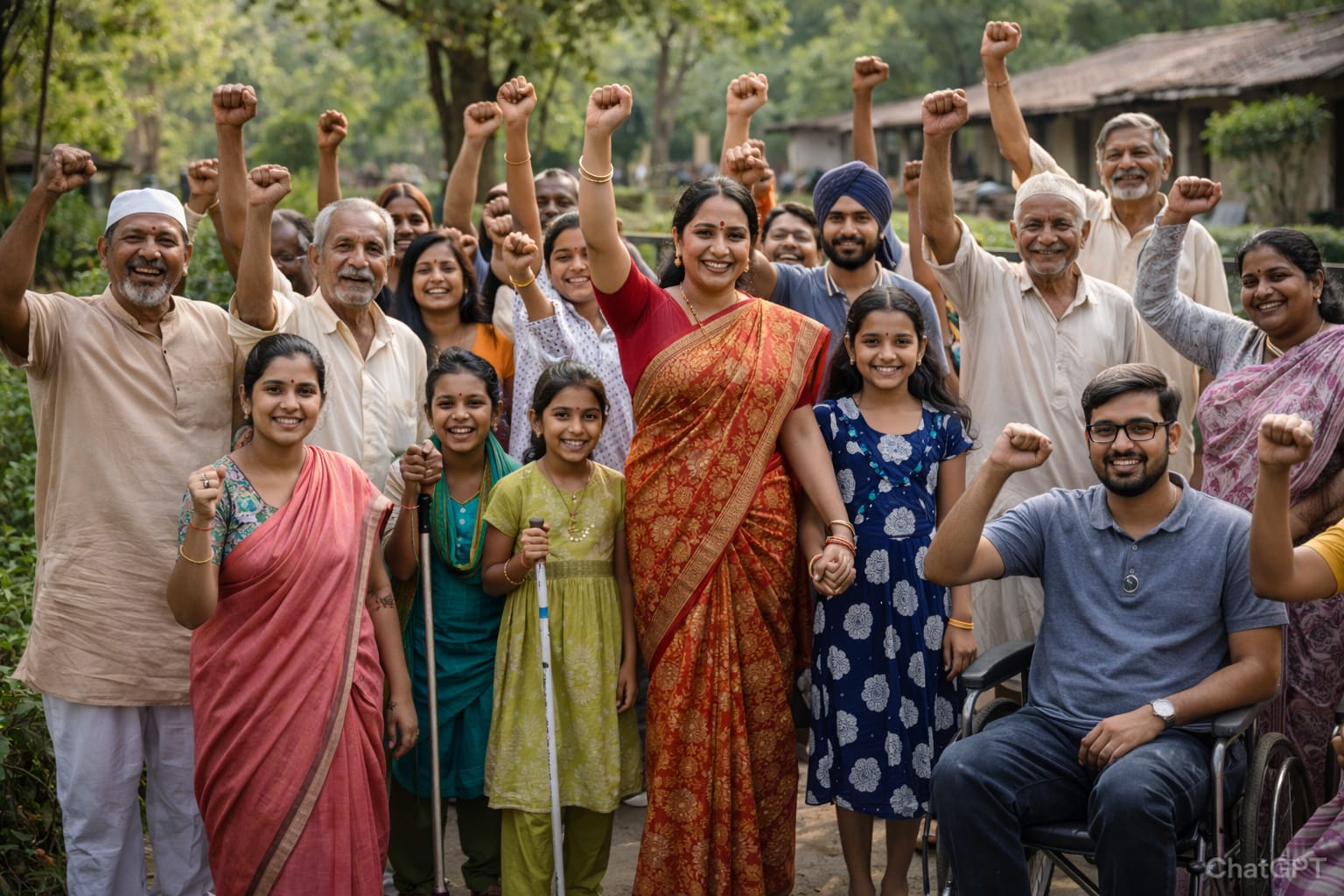
Special focus may be directed toward women, youth, children, persons with disabilities, and socially or economically marginalized communities. Initiatives may include access to education, skill development, healthcare support, mentorship, legal awareness, and safe community spaces.
Gender equity remains a critical dimension of inclusion. Efforts may involve awareness on rights, prevention of discrimination, and support mechanisms that promote safety, economic independence, and participation in leadership.
The Trust also recognizes the urgent need to address human trafficking and exploitation. Human trafficking represents a profound violation of freedom and dignity, affecting vulnerable populations through forced labour, sexual exploitation, child labour, and coercion. Combating such practices requires awareness, preventive education, collaboration with appropriate authorities, and support systems for survivors.
Support for survivors of trafficking and exploitation may include access to rehabilitation services, skill development opportunities, counselling referrals, and pathways toward reintegration with dignity and security. Prevention efforts focus on strengthening community vigilance, economic resilience, and awareness of deceptive recruitment practices.
Inclusion also extends to ensuring that individuals with disabilities, elderly persons, and economically disadvantaged groups have meaningful access to services, infrastructure, and participation. Accessibility, accommodation, and representation are approached as structural necessities rather than optional gestures.
Legal literacy and civic awareness initiatives may be undertaken to help individuals understand their rights and responsibilities within democratic frameworks. Strengthening civic participation contributes to transparent and accountable social systems.
The Trust views social justice not as confrontation, but as correction—aligning systems more closely with fairness and equal opportunity. True inclusion strengthens social cohesion and reduces long-term instability.
Building inclusive communities requires empathy, informed action, institutional collaboration, and sustained commitment. It involves listening to unheard voices, addressing systemic barriers, and creating pathways for participation and self-reliance.
Through awareness initiatives, empowerment programmes, survivor support, legal literacy efforts, anti-trafficking engagement, and community inclusion projects, the Trust seeks to contribute toward a society where dignity is protected, opportunity is accessible, and justice is not selective.
When individuals are safe, informed, and included, communities become stronger. And when justice becomes structural rather than occasional, progress becomes sustainable.