Contribute toward the service of truth and collective well-being. Click here

- Home
-
About Us ▾
About Us Tattvabodh Trust The Abstract Mission Certificate Founders The Abstract Monk [GD] Aadya Tyagi
- Our Work ▾
-
Impact ▾
Impact Stories The Wisdom Project Human Potential Development Education Healthcare Nutrition Arts, Literature & Aesthetics Culture & Heritage Livelihood Institutions Women & Youth Environment & Energy Relief & Rehabilitation Digital Transformation Social Justice Scholarship Programme
Impact Numbers Our Journey - Wisdom Hub ▾
- Mission 1.5
- Media
- Youtube
- The Abstract Club
- Get Involved
- Contact Us
Livelihood &
Rural Development
Prosperity is sacred when it sustains life
without wounding the Earth
Overview
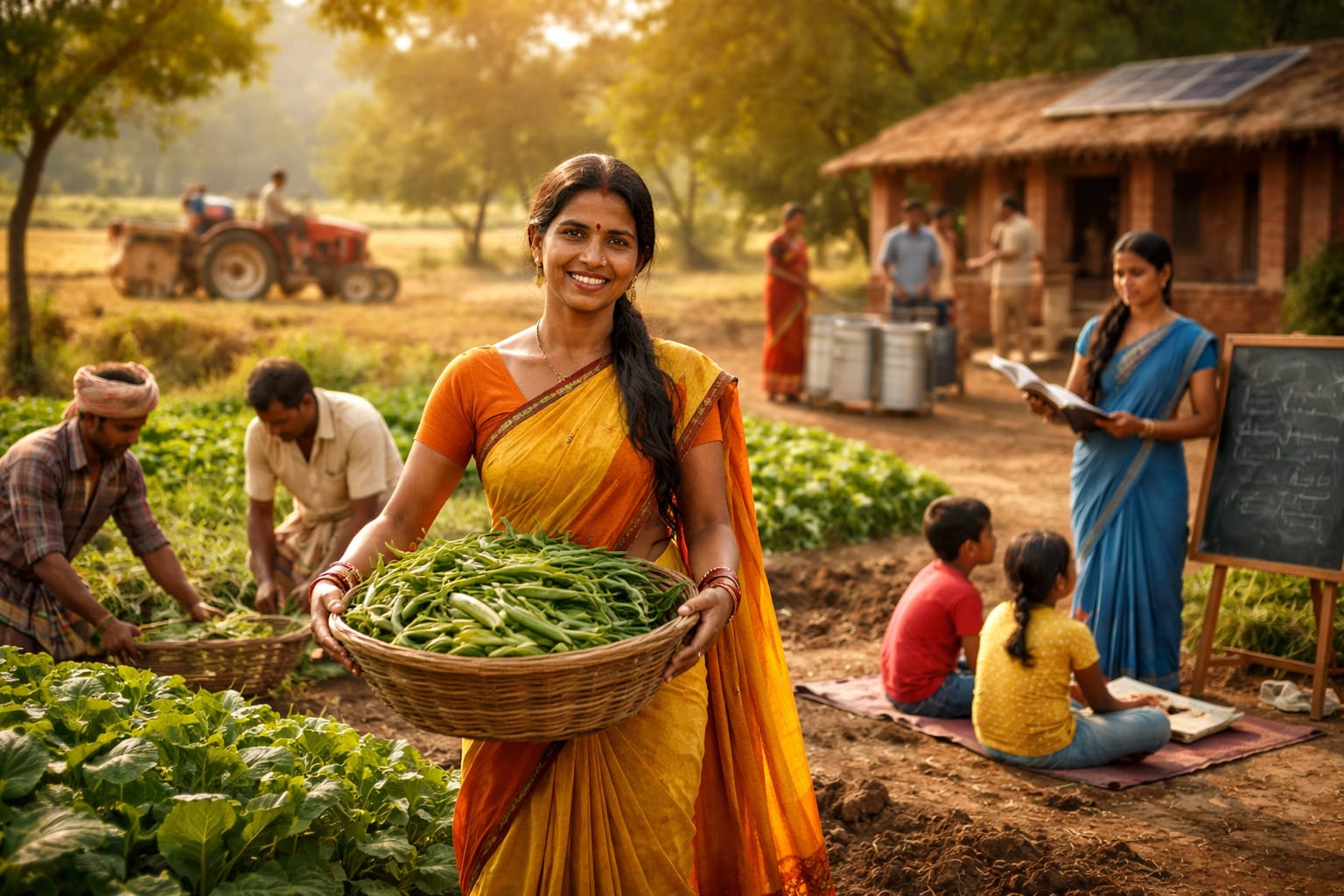
Economic stability forms the foundation of individual dignity and community resilience. Sustainable livelihoods enable families to secure education, access healthcare, maintain nutrition, and participate meaningfully in social and civic life. When income opportunities are fragile or uneven, vulnerability extends beyond economics—it affects health, mobility, and generational progress.
Rural communities often face structural challenges including limited access to diversified employment, fluctuating agricultural income, migration pressures, skill gaps, and inadequate infrastructure. While rural regions carry immense cultural knowledge, agricultural strength, and human potential, the absence of institutional support can restrict long-term growth.
The Trust approaches livelihood and rural development as a structured effort toward economic self-reliance and sustainable community advancement.
Skill development initiatives are designed to enhance employability and entrepreneurial capacity among youth and working adults. Training programmes focus on practical competencies aligned with local economic realities—ranging from vocational skills and micro-enterprise development to digital literacy and financial management. The objective is to strengthen income-generating ability while fostering dignity, self-reliance and autonomy.
Agricultural sustainability forms an important dimension of rural development. Programmes may include awareness and training in sustainable farming practices, soil health management, water conservation, crop diversification, and access to relevant technical knowledge. Supporting farmers with information and resource networks strengthens productivity while preserving ecological balance.
Women’s economic participation is treated as central to community stability. Initiatives encourage learning groups, cooperative models, financial literacy, and access to micro-enterprise opportunities. When women gain economic agency, households experience improved stability, educational continuity, and nutritional outcomes.
Youth engagement is equally critical. Structured mentorship, leadership development, and vocational pathways aim to reduce distress migration and create meaningful opportunities within rural ecosystems. Enabling young individuals to envision viable futures within their communities strengthens long-term rural vitality.
Entrepreneurship and small-scale enterprise development are supported through guidance, networking platforms, and collaborative partnerships. Encouraging local production, craftsmanship, and service-based initiatives contributes to diversified income streams and reduced economic dependency.
Infrastructure awareness and community coordination also play a role in sustainable rural progress. Engagements may involve sanitation initiatives, access to clean water practices, resource management awareness, and facilitation of linkages between communities and institutional support systems.
The Trust recognises that rural development is not achieved through isolated intervention, but through integrated strengthening of education, healthcare, nutrition, and economic capacity. Livelihood security directly influences every other dimension of human development.
Central to this work is the principle of dignity. Livelihood programmes are not structured as dependency models, but as capacity-building efforts that enable individuals and communities to generate, manage, and sustain their own economic growth.
Resilient rural communities contribute not only to local stability but to national strength. Agricultural productivity, cultural continuity, resource stewardship, and decentralised economic activity all depend upon thriving rural ecosystems.
Through skill development initiatives, agricultural support programmes, women and youth empowerment efforts, entrepreneurship facilitation, and community partnerships, the Trust works toward building economically stable, self-reliant, and forward-looking rural communities.
Sustainable livelihoods strengthen families. Stable families anchor communities. And empowered rural communities form the backbone of inclusive and enduring development.