








THE COST OF A WARMING PLANET
Source: science.nasa.gov

Source: science.nasa.gov

Source: science.nasa.gov
Source: science.nasa.gov


SCIENTIFIC DATA & EVIDENCE OVER THE YEARS
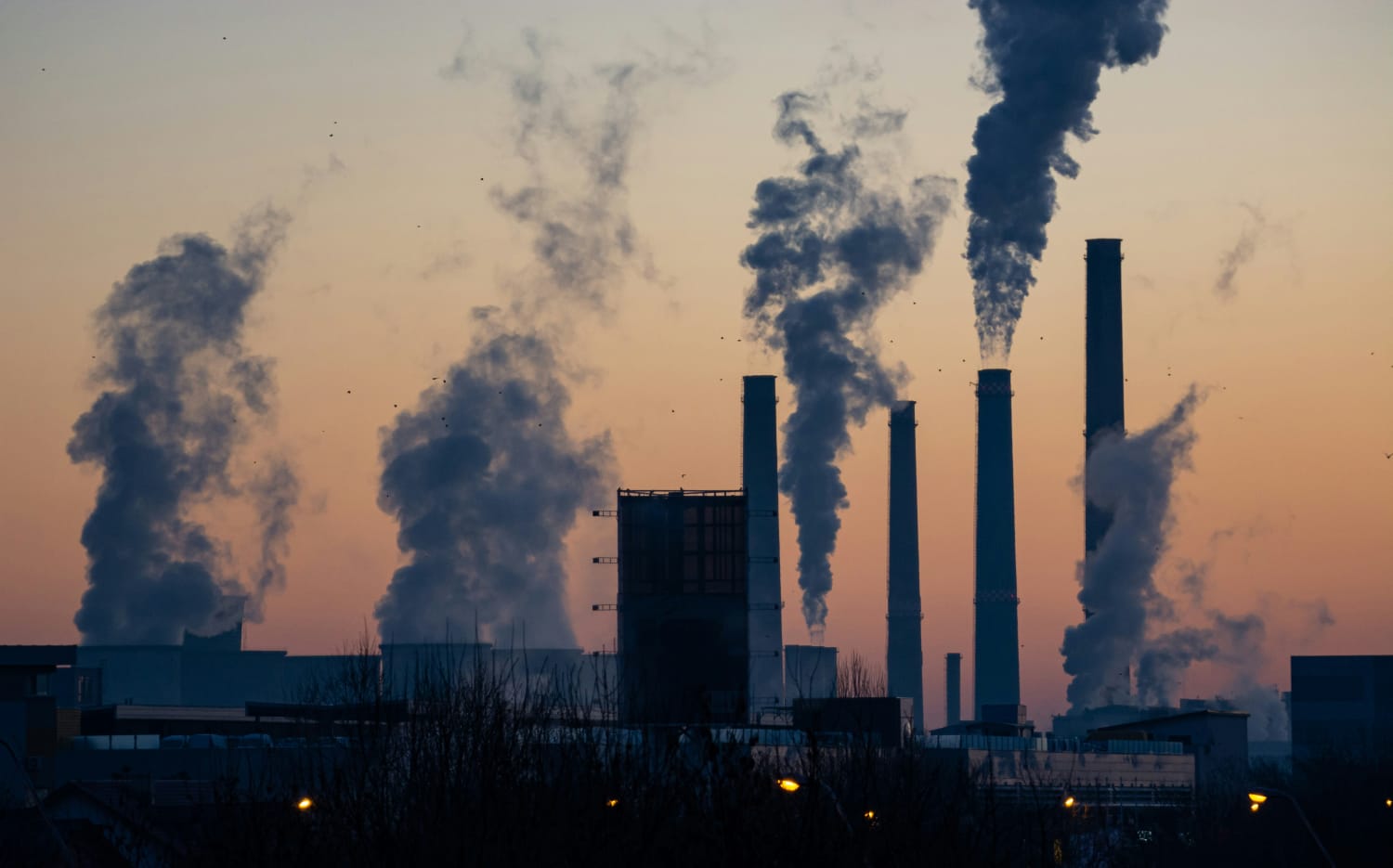
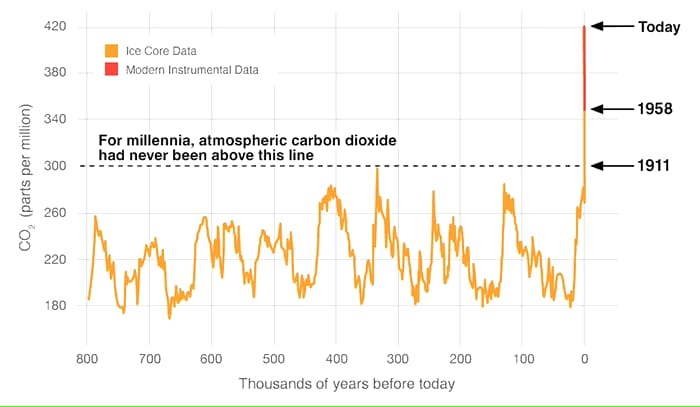
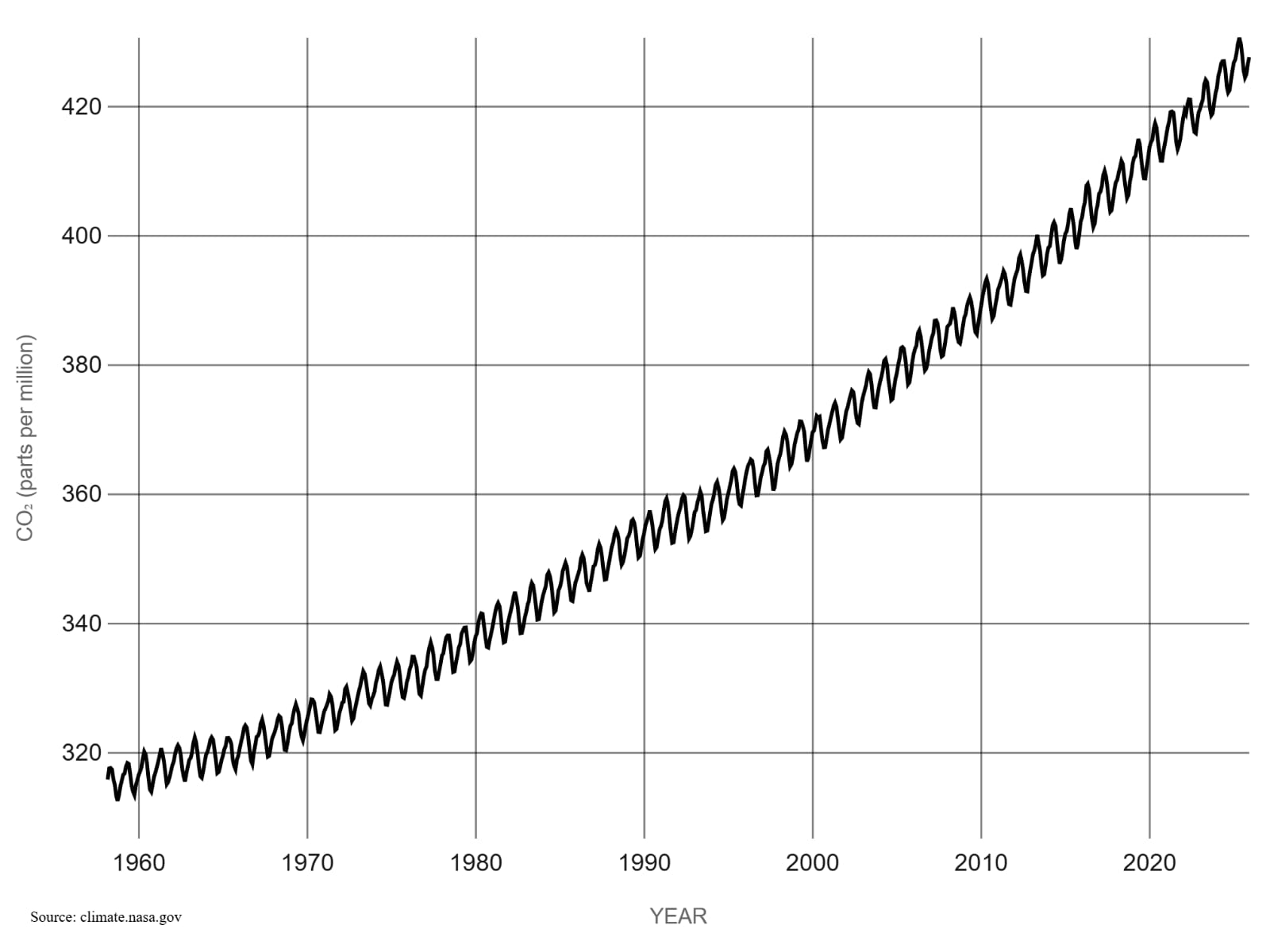
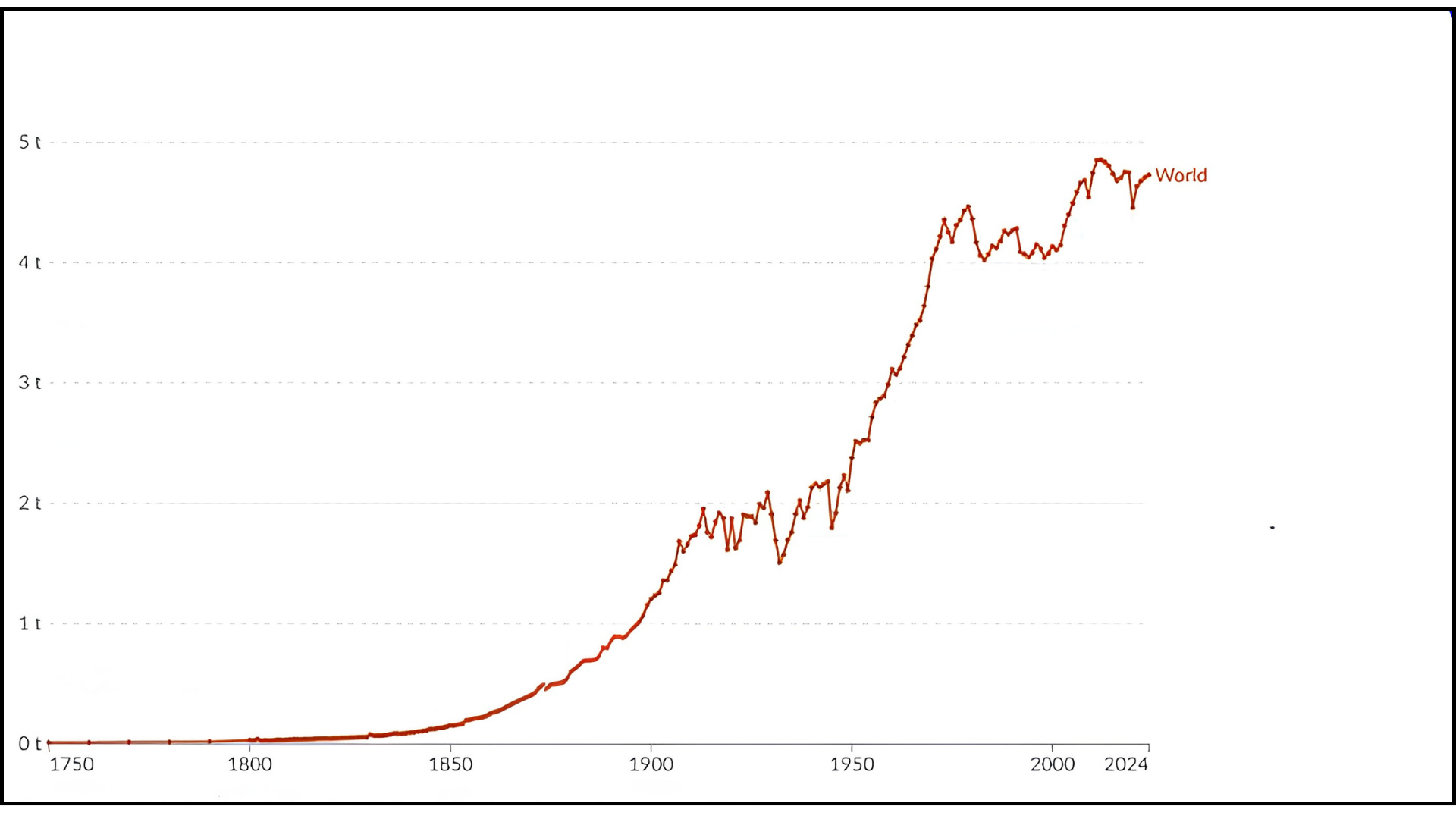
Carbon dioxide (CO2) is the primary greenhouse gas emitted by human activities. It accumulates in the atmosphere for centuries, trapping heat and driving long-term global warming and climate disruption.
- 429 ppm CO2 in the atmosphere – highest level in ~2 million years
- 280 ppm -> 420 ppm since pre-industrial times – a ~50% increase caused by human activity
- ~37 billion tonnes of CO2 emitted annually from fossil fuels
- ~75% of total global greenhouse gas emissions are CO2
- Responsible for ~65% of human-caused global warming
- CO2 remains in the atmosphere for 300–1,000+ years, locking in warming
- Doubling CO2 ≈ +3°C global temperature rise
- CO2 is rising ~10× faster than natural increases after the last ice age
- Humans emit ~100× more CO2 per year than all volcanoes combined (USGS)
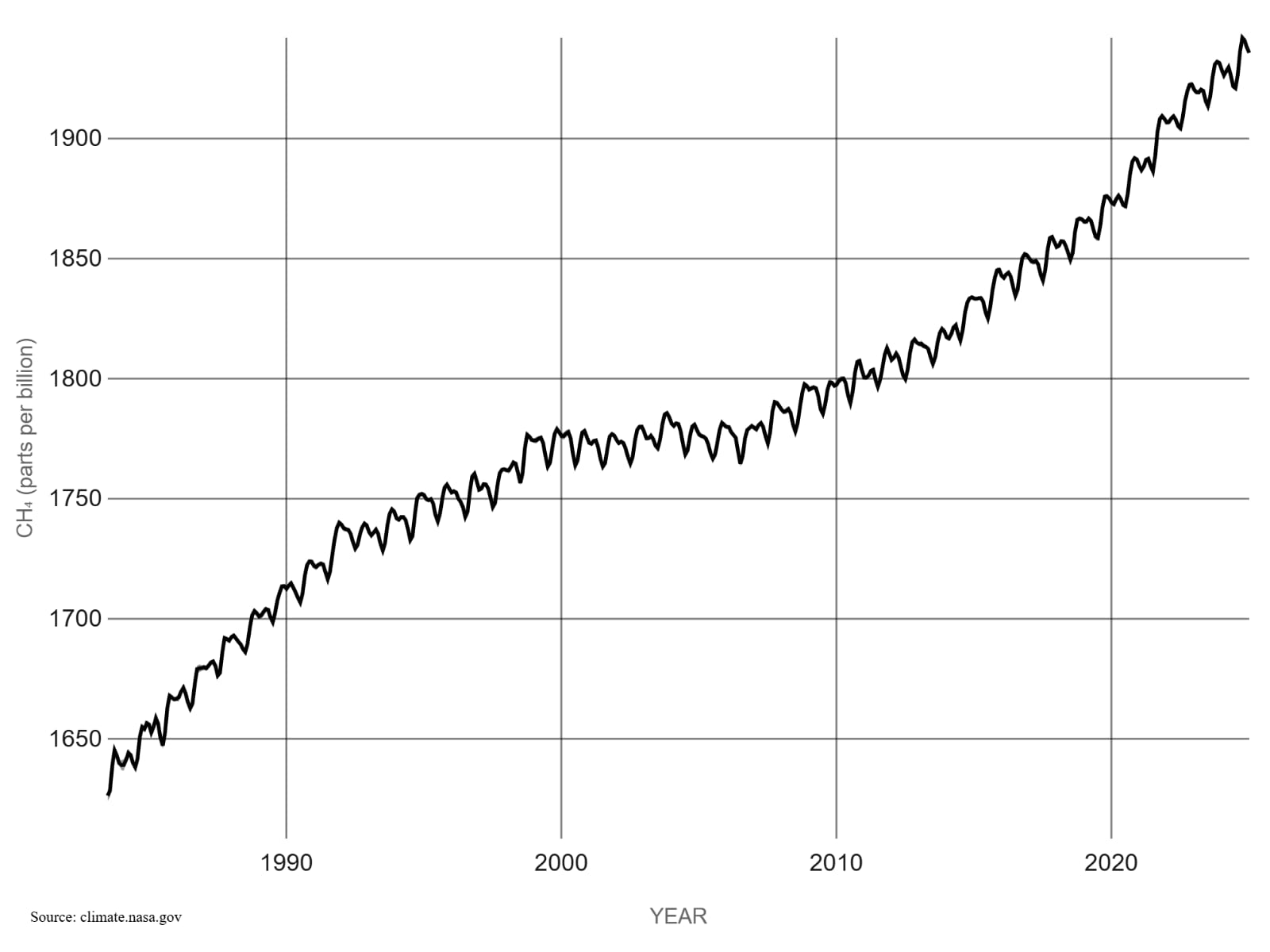
Methane (CH4) is a powerful greenhouse gas released from fossil fuel extraction, agriculture, landfills, and natural systems. Though it stays in the atmosphere for a shorter time than CO2, it traps far more heat, making it a major driver of near-term global warming.
- ~1,946 ppb methane in the atmosphere – highest level in at least 800,000 years
- ~2.6× increase since pre-industrial levels (~700 ppb)
- Methane is ~84× more powerful than CO2 over a 20-year period
- ~30% of current global warming is driven by methane
- Atmospheric lifetime: ~12 years, making reductions highly effective
- ~60% of methane emissions come from human activities
- Major human sources: fossil fuels (~35%), agriculture (~40%), waste (~20%)
- Cutting methane could reduce warming by ~0.3°C by 2040
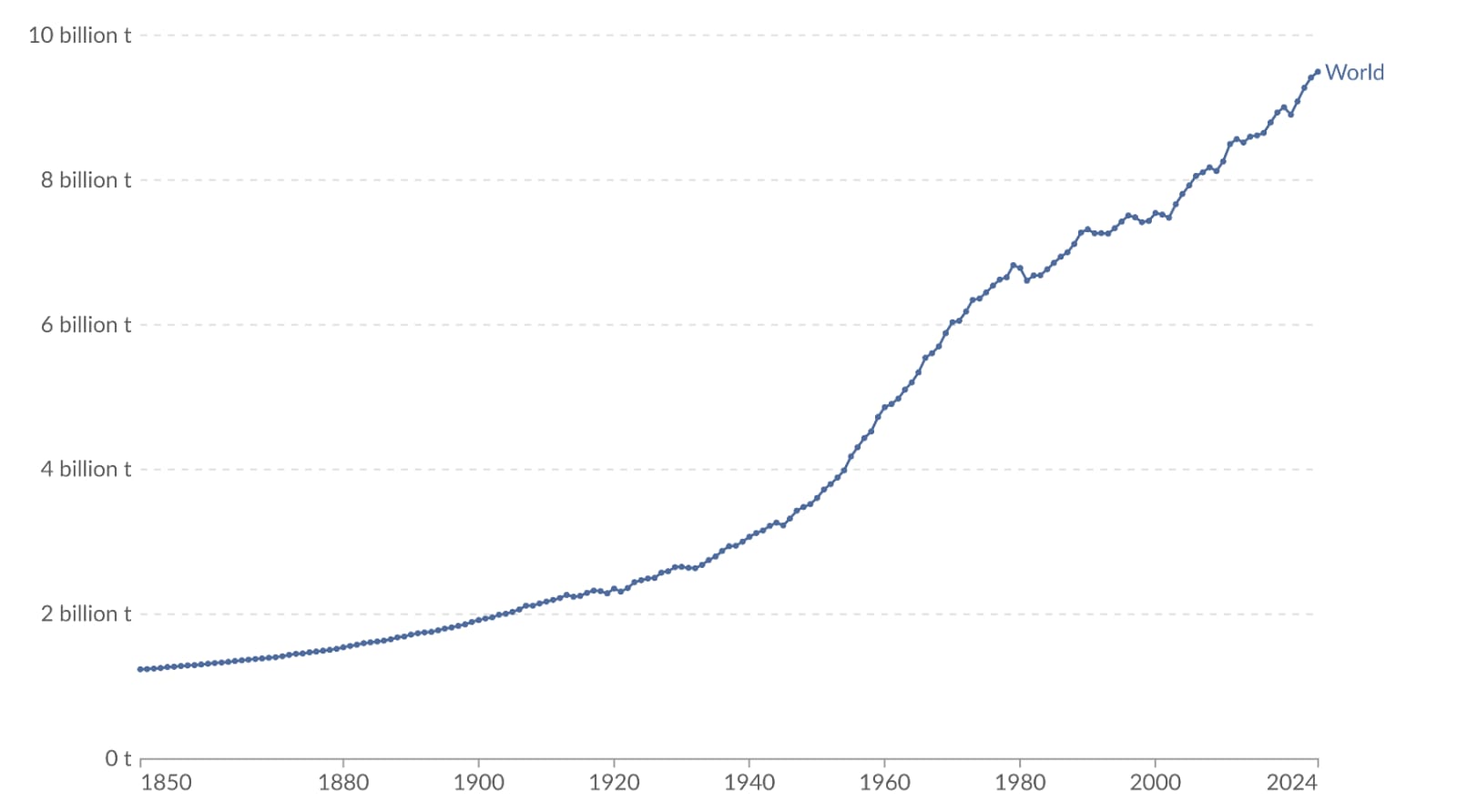
Nitrous oxide (N2O) is a long-lived, highly potent greenhouse gas released mainly from agricultural activities, especially fertilizer use. Though emitted in smaller amounts than CO2 or methane, it has a powerful warming effect and persists for over a century.
- Atmospheric N2O concentration: ~336 ppb – highest level in at least 800,000 years
- Increase since pre-industrial levels (~270 ppb): ~25% rise
- N2O is ~273× more powerful than CO2 over a 100-year period
- Atmospheric lifetime: ~110–120 years
- Accounts for ~6–7% of total global greenhouse gas emissions
- ~75% of global N2O emissions come from agriculture, mainly synthetic fertilizers and manure
- N2O is now the largest remaining ozone-depleting substance emitted by human activities
- Global N2O emissions have increased by ~30% since the 1980s (Global Carbon Project)
- N2O warming effects are effectively irreversible on human timescales due to its long lifetime
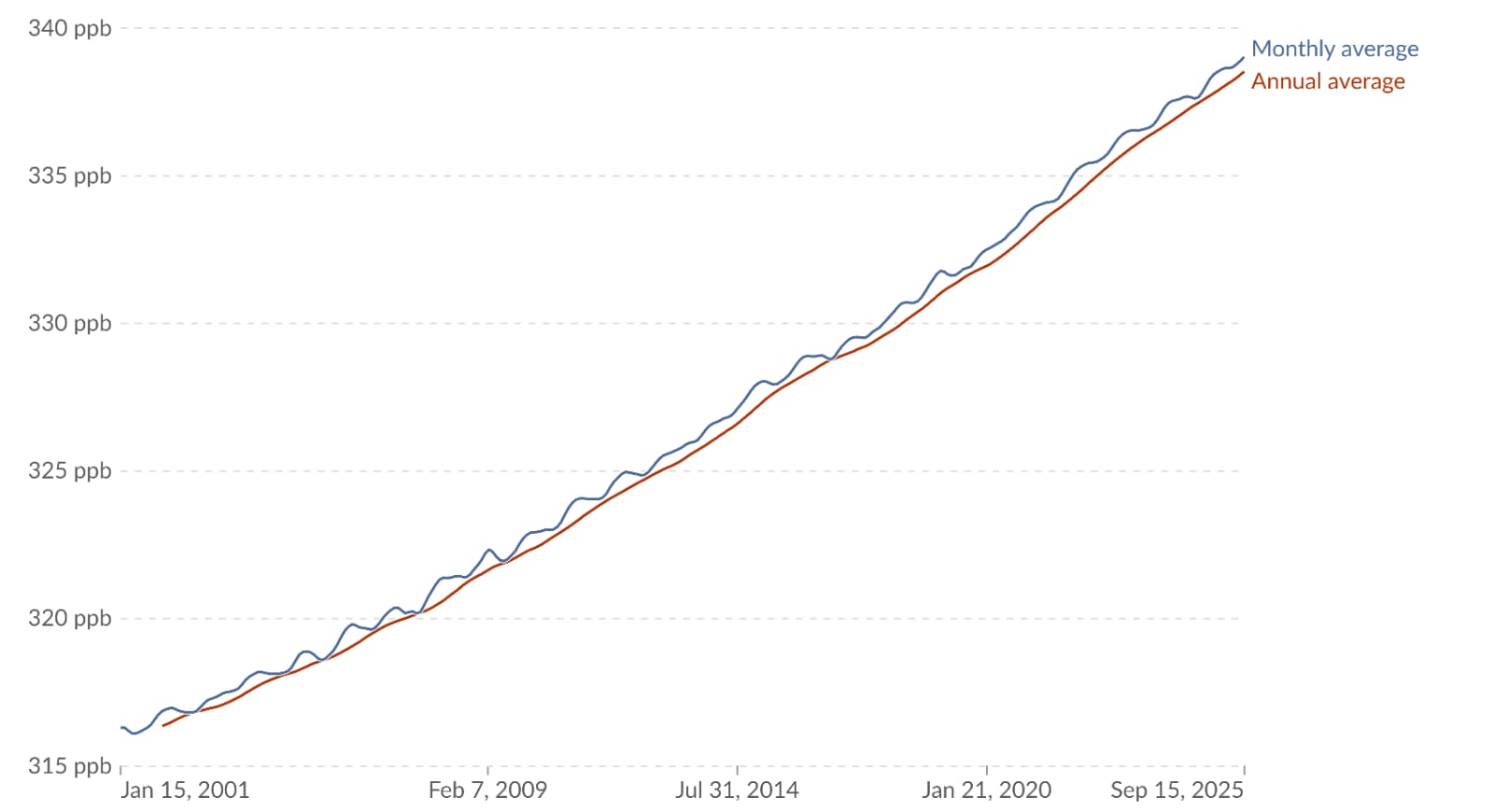
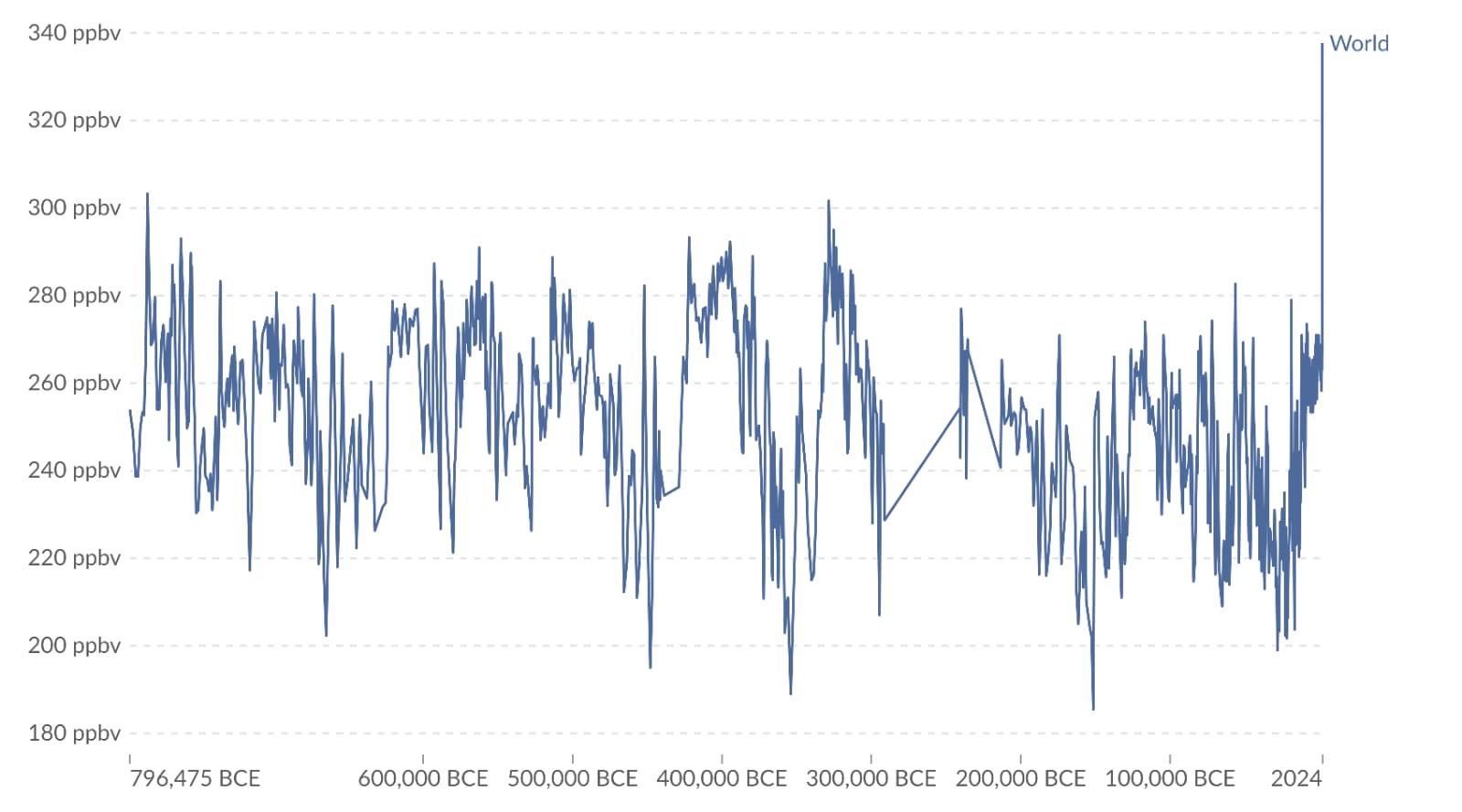
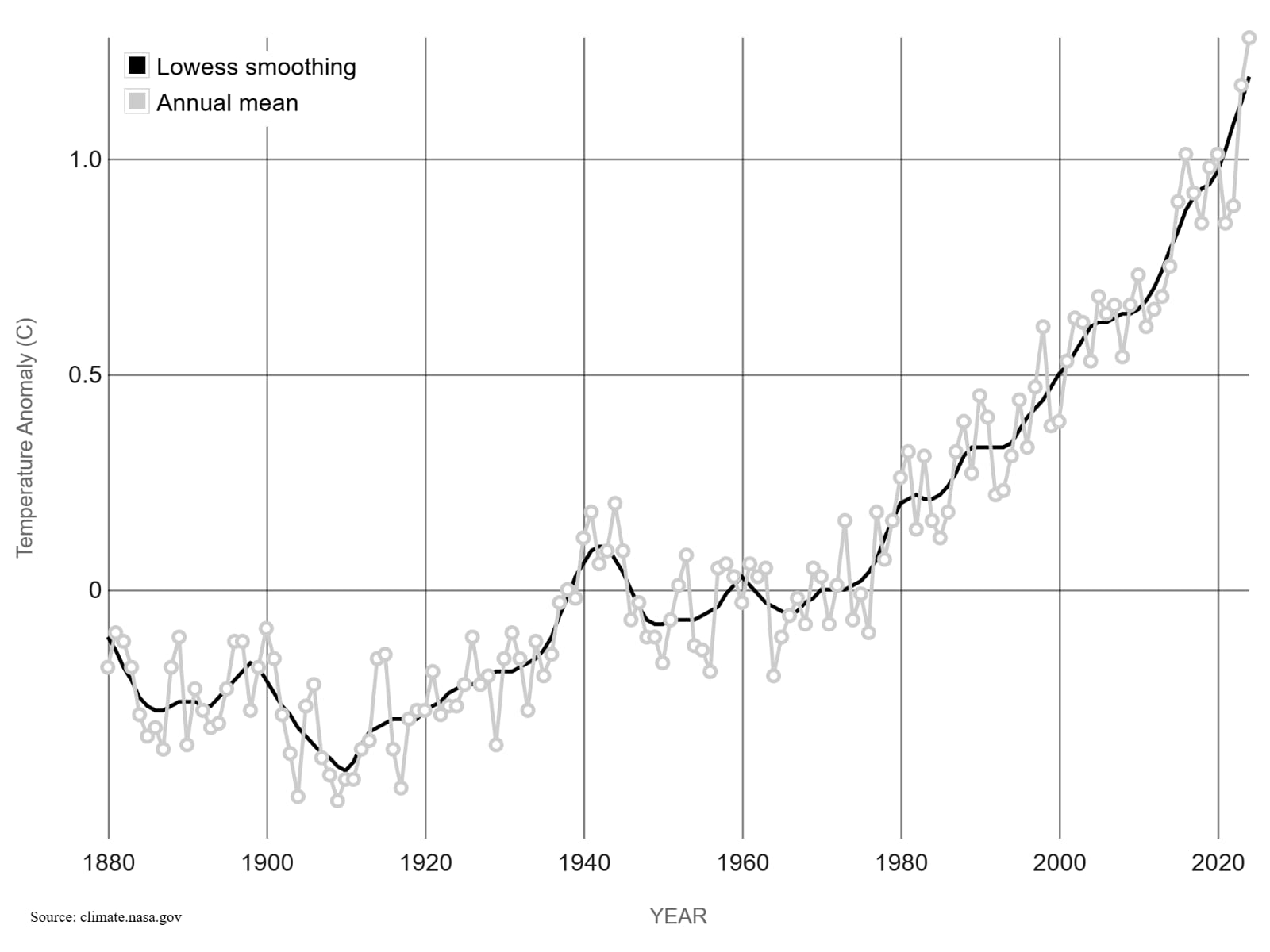
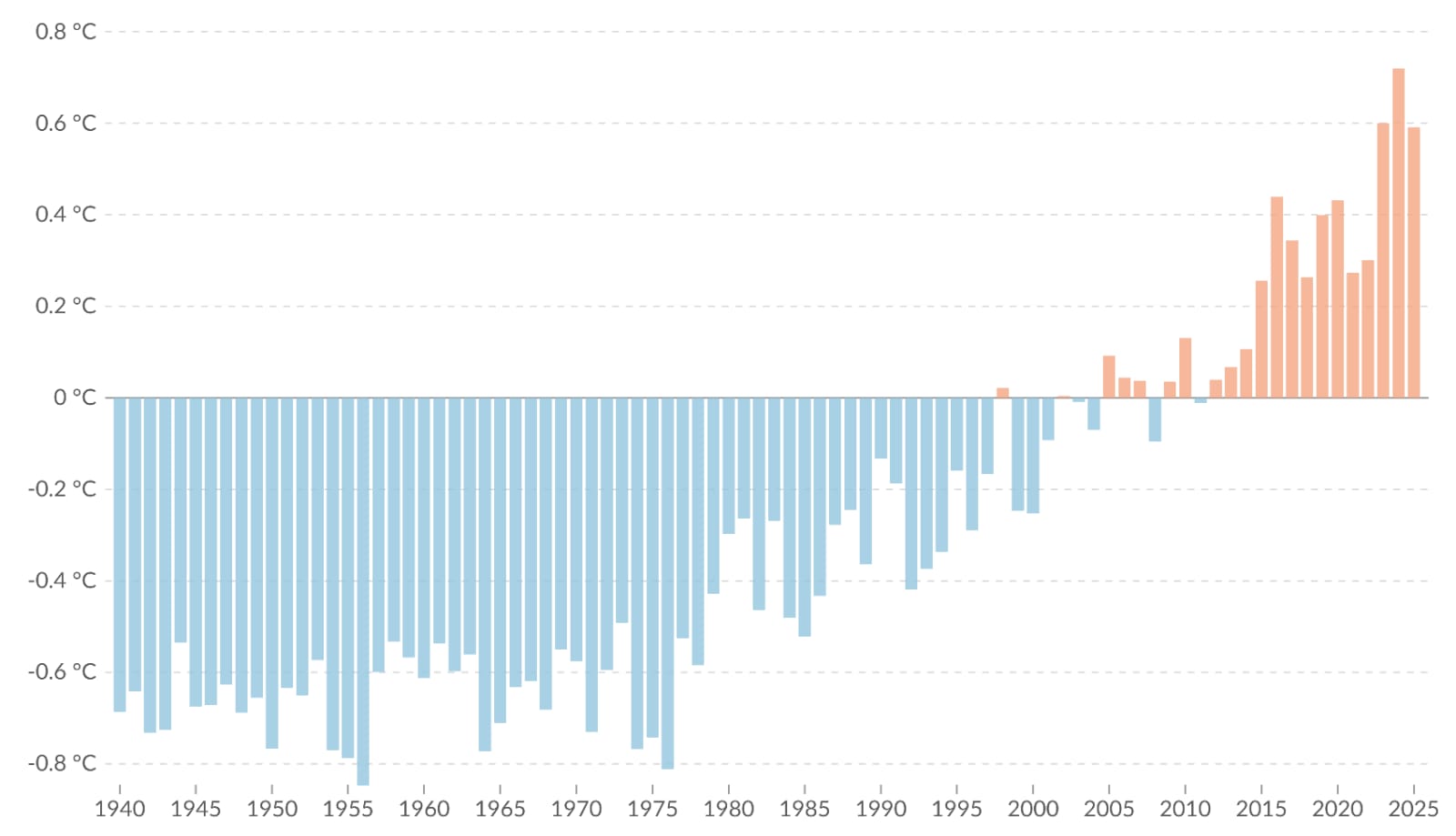
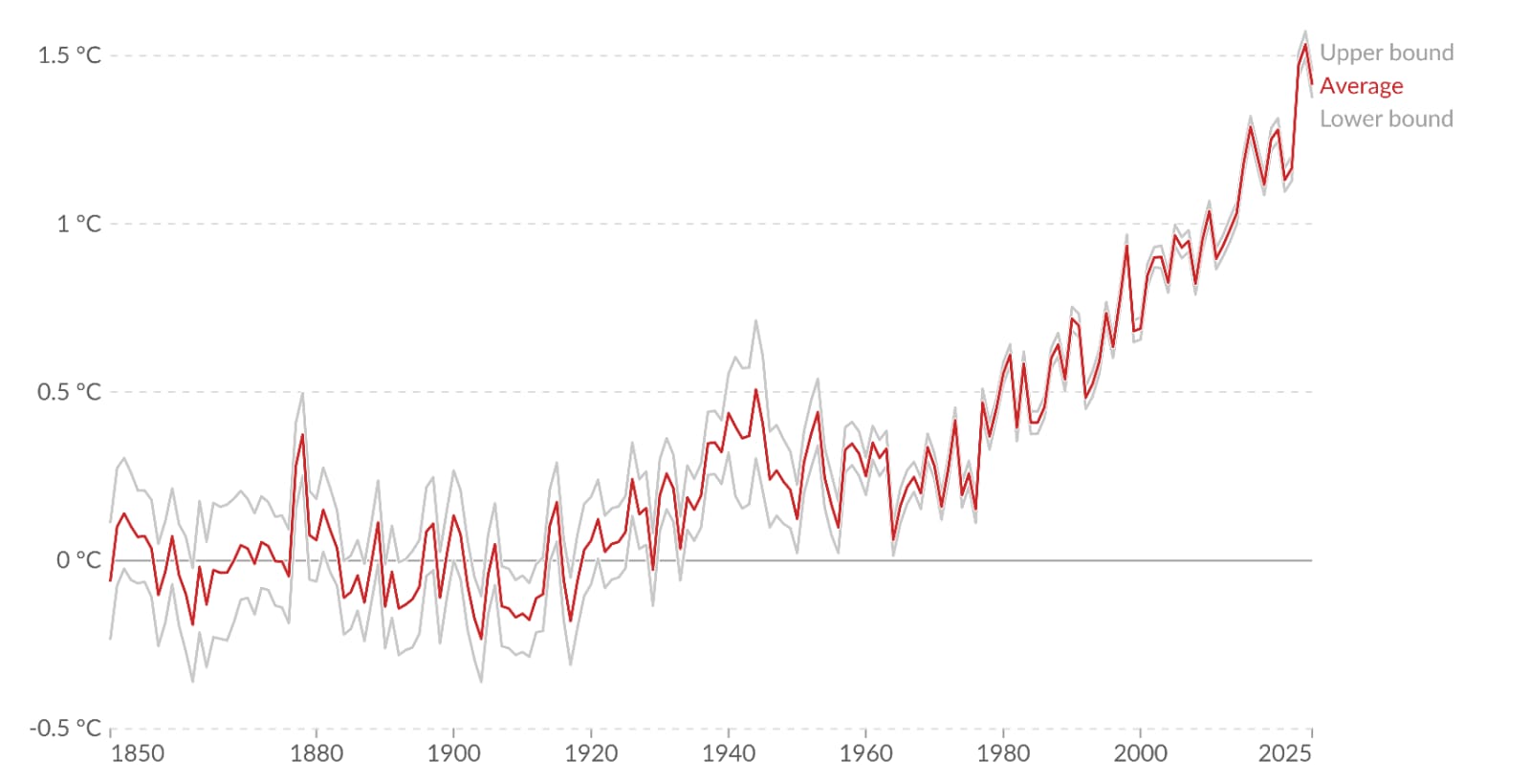
Global temperature reflects the average heat of Earth’s surface, oceans, and atmosphere. Rising global temperatures are the clearest indicator of climate change, driven primarily by human-caused greenhouse gas emissions.
- Global average temperature has risen ~1.2–1.3°C above pre-industrial levels
- 2024 was the hottest year on record, reaching 1.55°C above pre-industrial levels
- The last 10 years (2015–2024) were the warmest ever recorded
- Earth is warming at a rate of ~0.2°C per decade
- 2024 was the first full calendar year to exceed 1.5°C above pre-industrial levels (WMO/Copernicus)
- Warming over land is ~2× faster than the global average
- The Arctic is warming ~4× faster than the global mean
- Each additional 0.1°C increases risks of extreme heat, floods, droughts, and wildfires
- Without deep emissions cuts, warming is projected to reach ~2.5–3°C by 2100
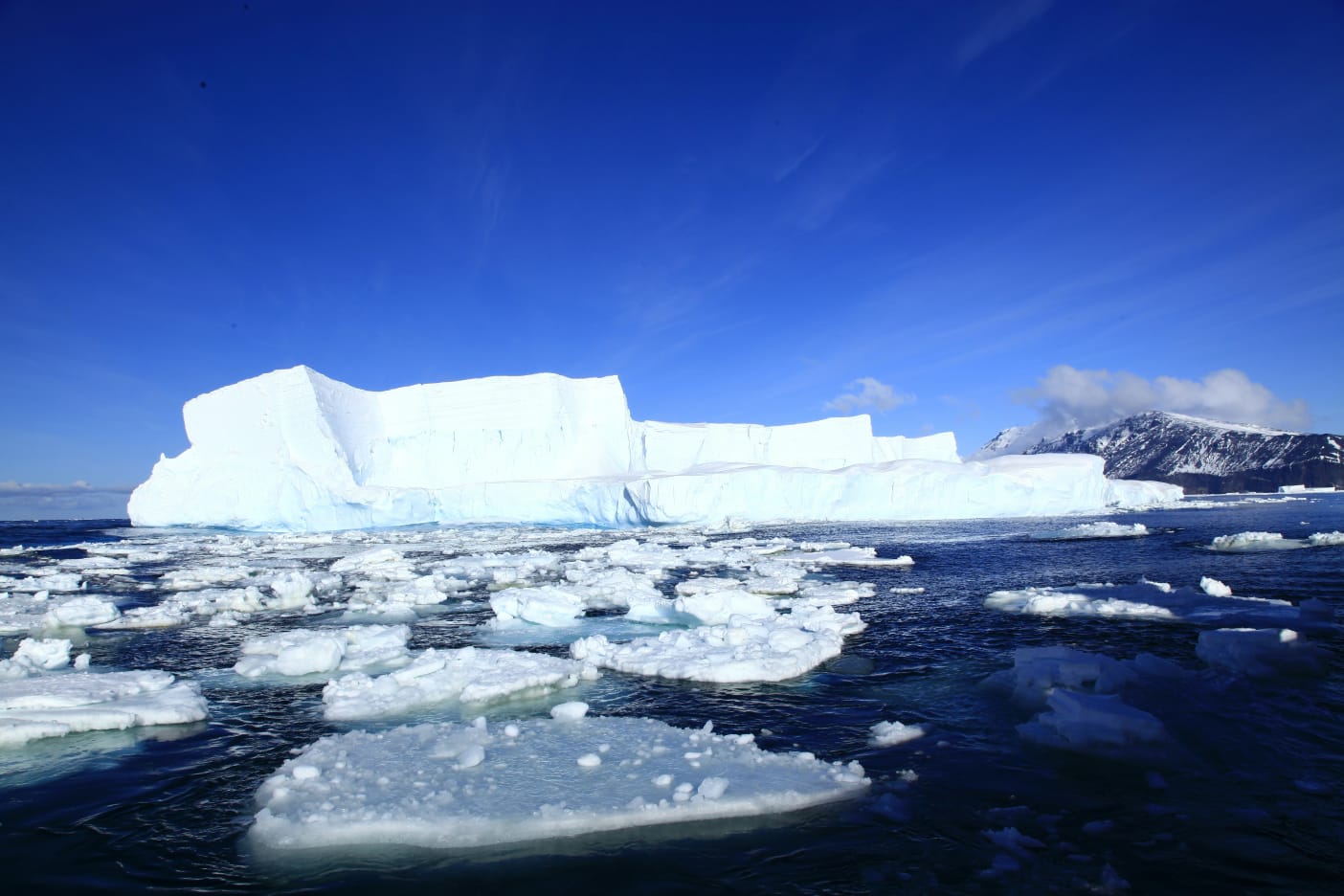
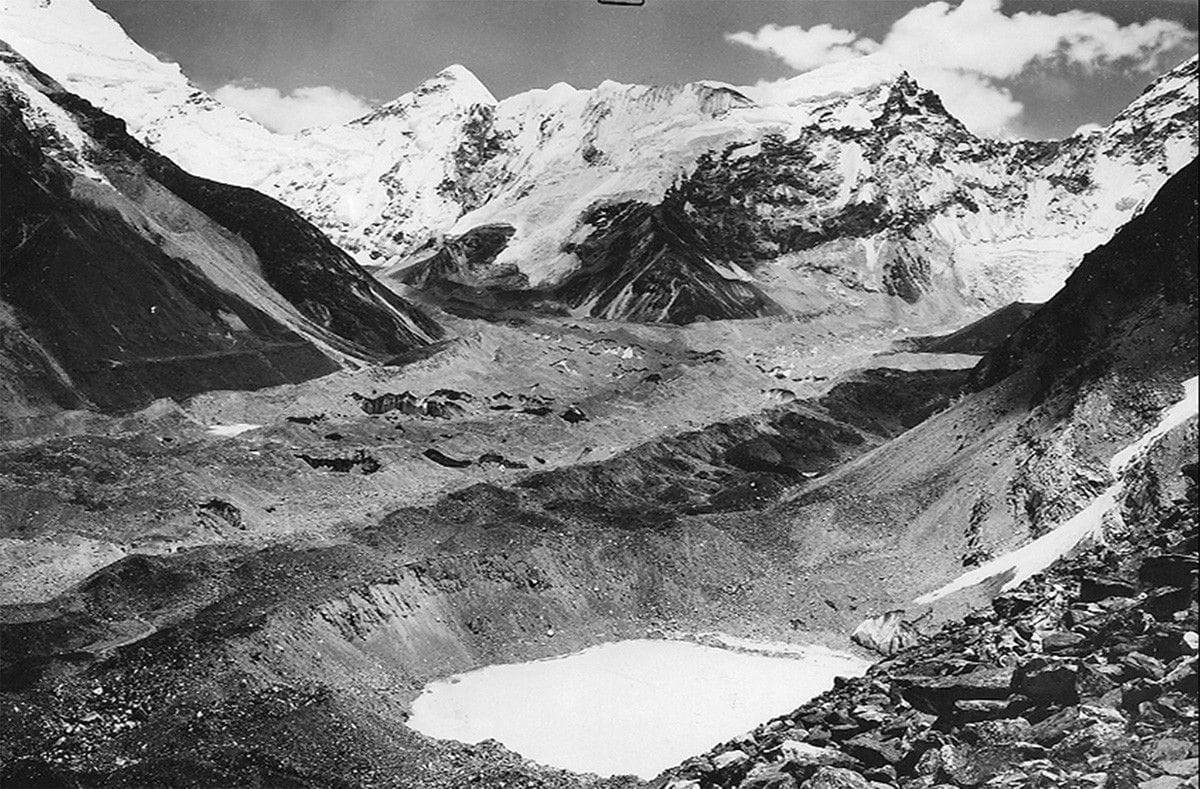
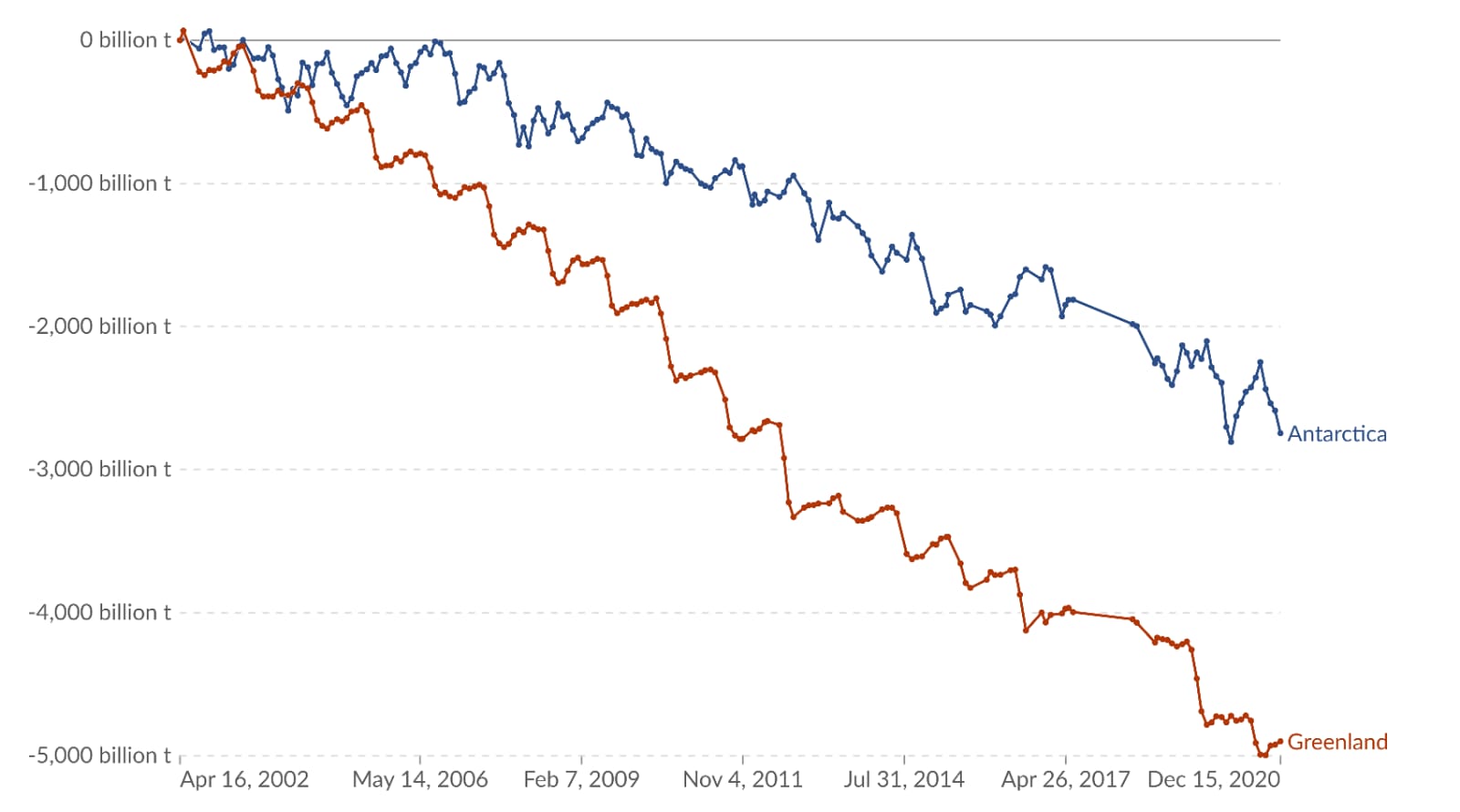
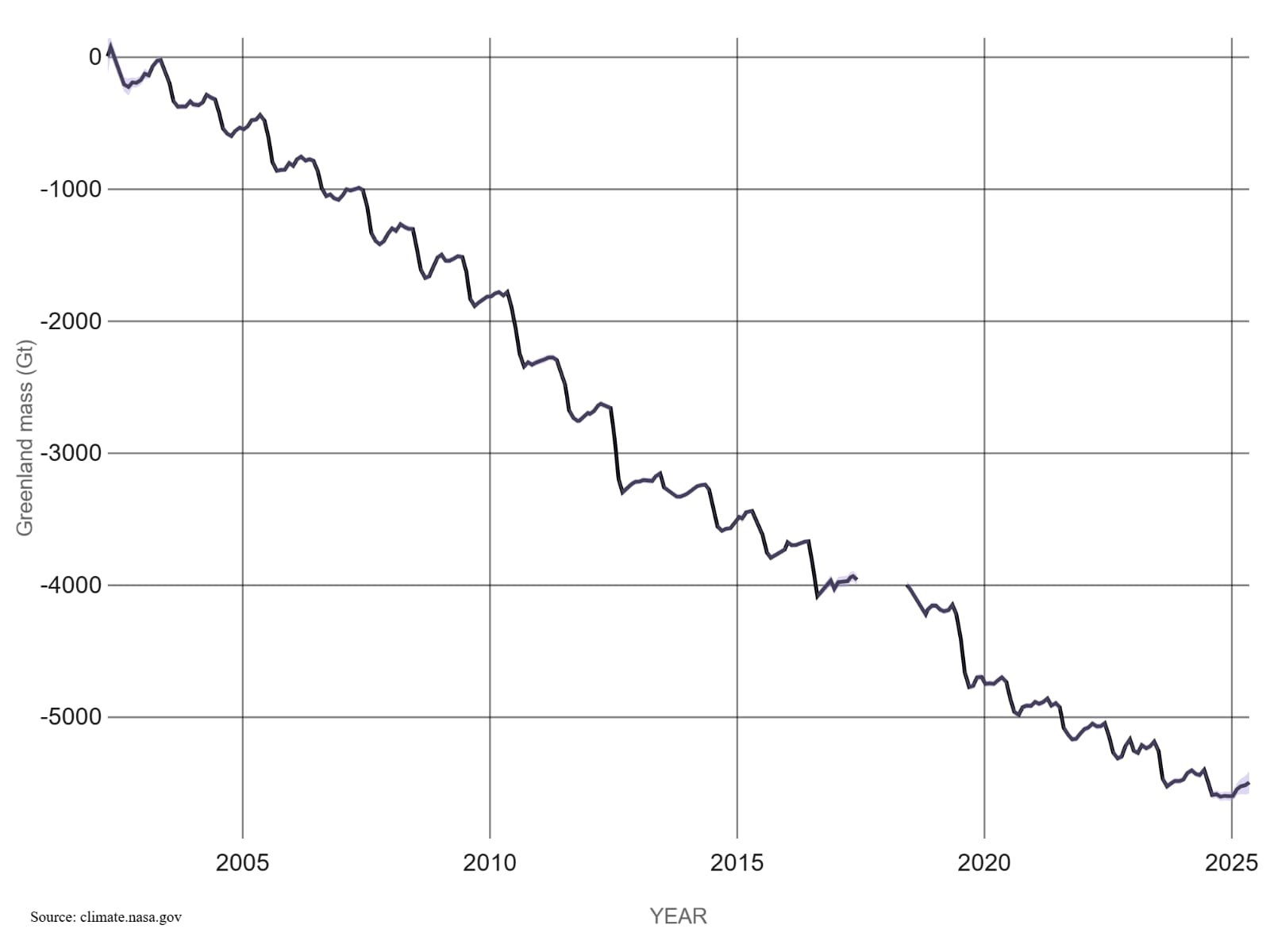
Ice sheets are massive, continent-scale bodies of ice covering Greenland and Antarctica. They store enough frozen water to raise global sea levels by many meters, and their accelerating melt is a major indicator of a warming planet.
- Greenland and Antarctica together contain ~99% of Earth's freshwater ice
- Greenland Ice Sheet is losing about ~266 billion tonnes of ice per year
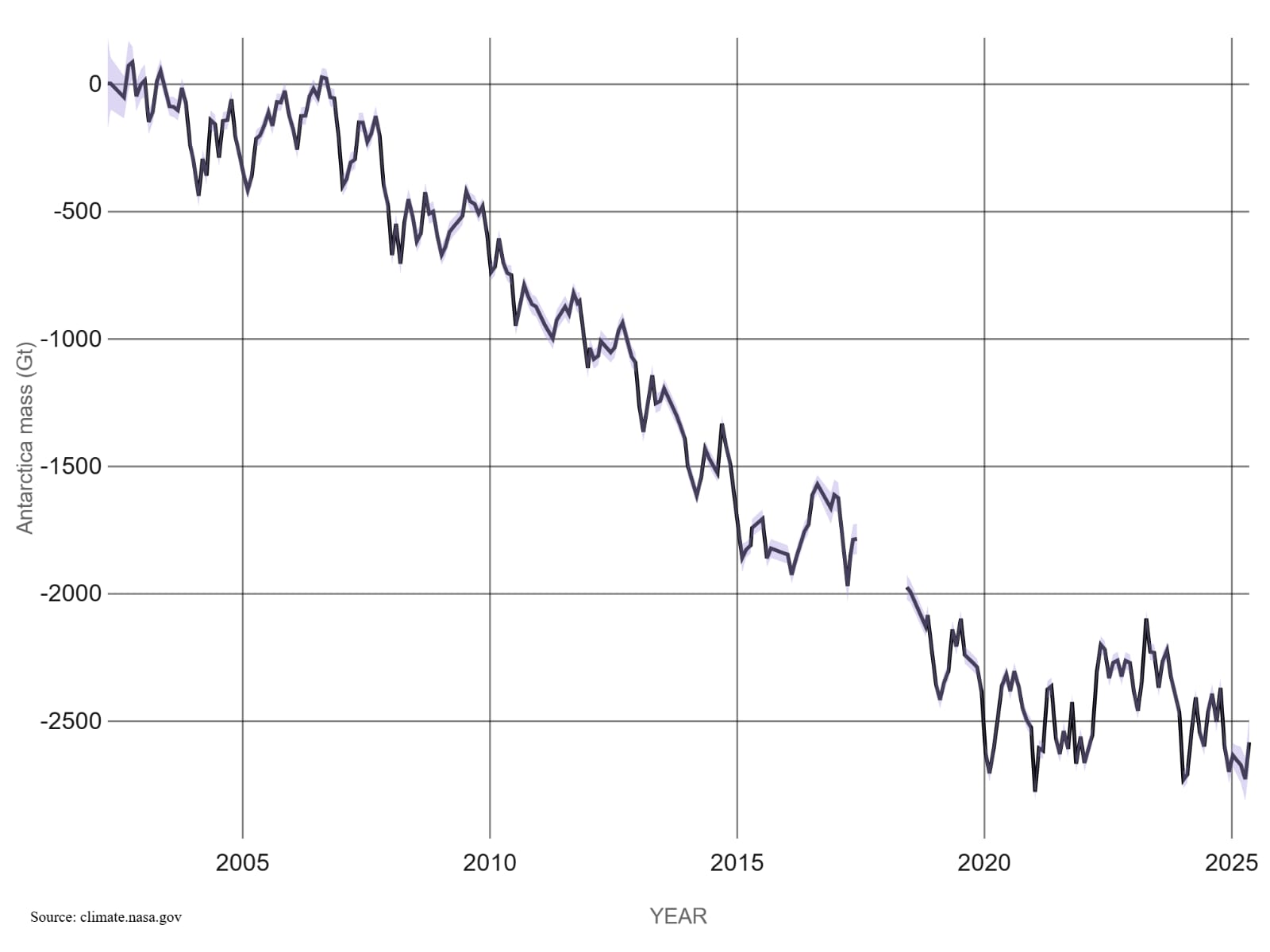
- Antarctic Ice Sheet is losing about ~135 billion tonnes per year
- Combined ice sheet loss contributes ~1.2 mm per year to global sea level rise
- Greenland melt alone raises sea level by ~0.7 mm per year
- Ice sheet mass loss has quadrupled since the 1990s
- Greenland ice loss has contributed ~20–25% of total sea level rise since 2000
- Antarctica holds enough ice to raise sea levels by ~58 meters if fully melted
- Greenland holds enough ice to raise sea levels by ~7 meters
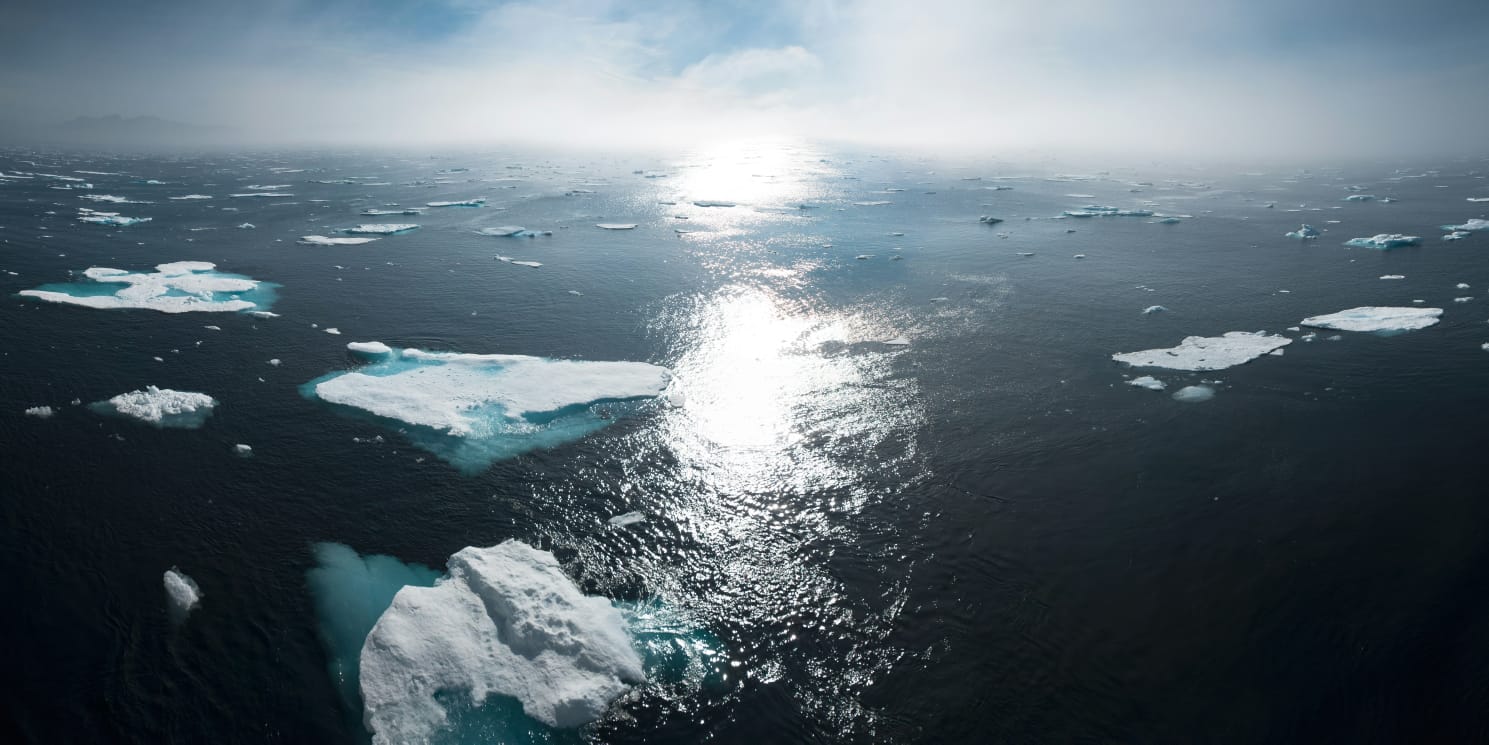
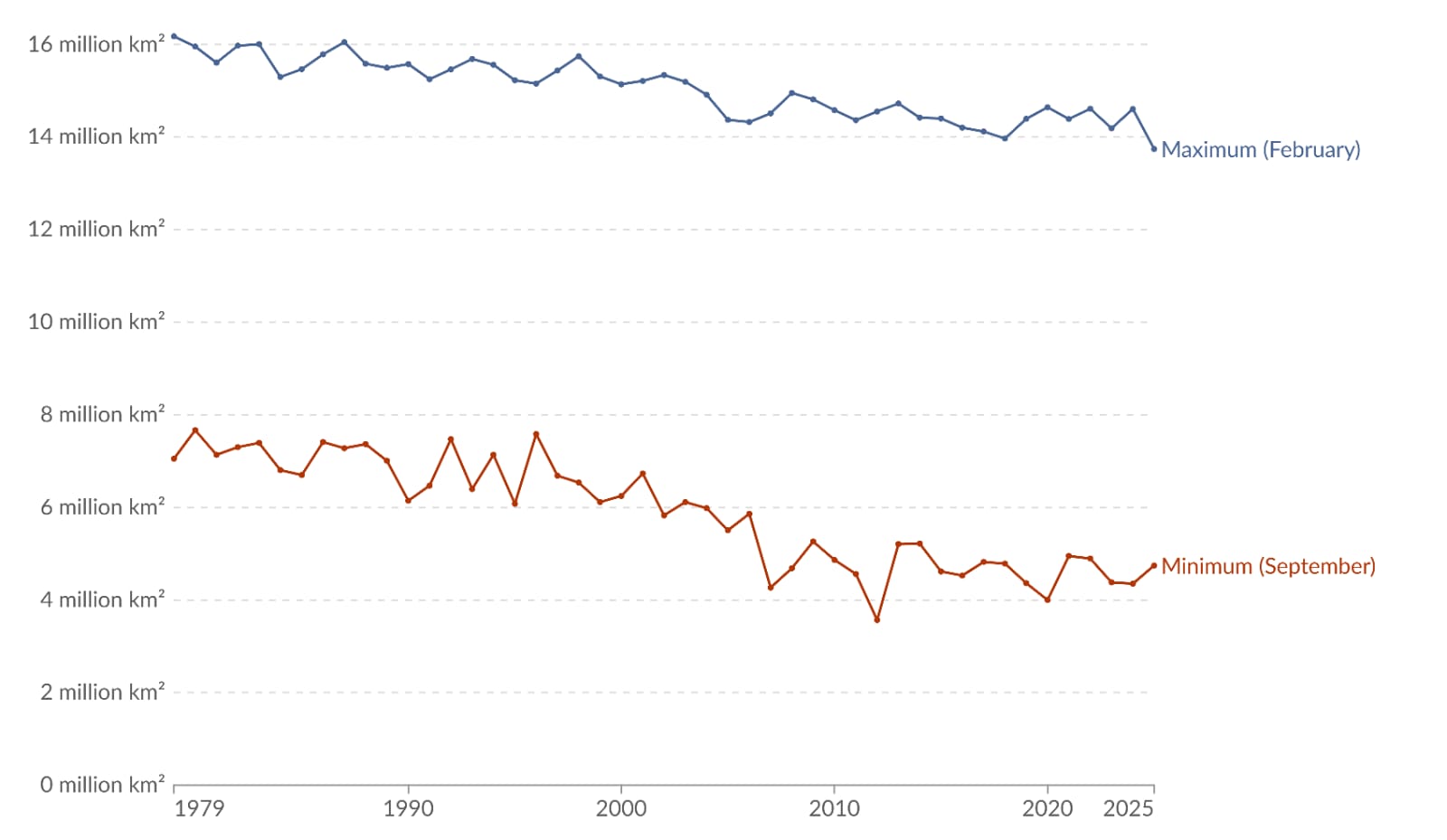
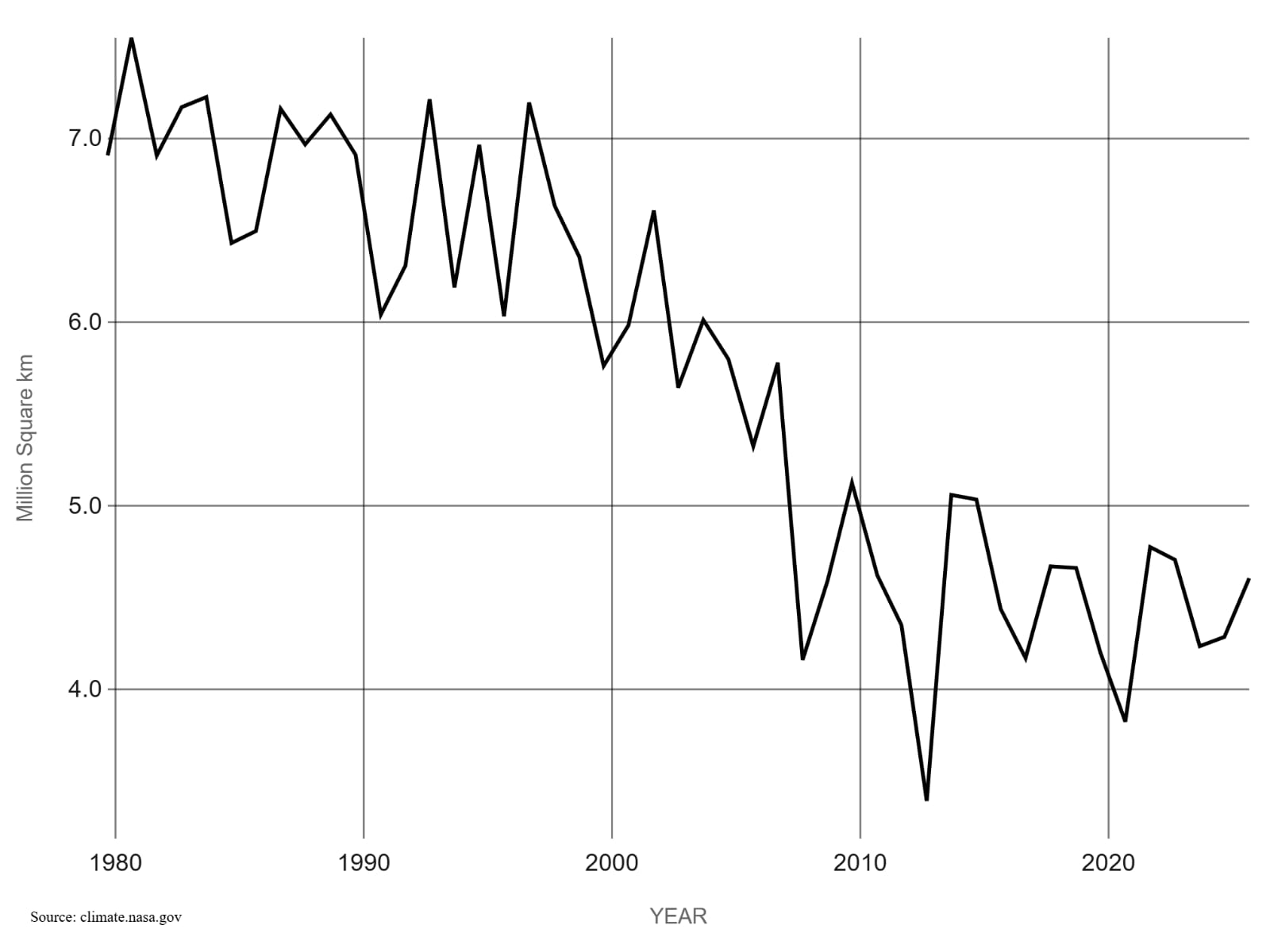
Arctic sea ice reaches its annual minimum each September. The rapid decline in this minimum extent is one of the clearest and fastest-moving indicators of global warming, driven by rising air and ocean temperatures and amplified by feedback loops.
- Arctic summer sea ice has declined by ~13% per decade since satellite records began
- 2023 minimum extent: ~4.2 million km², far below the historical average (NSIDC)
- The lowest minimum on record was 3.39 million km² in 2012 (NSIDC)
- Average September sea ice extent is now ~40% lower than in the 1980s
- Arctic sea ice thickness has declined by ~65% since 1979
- Multi-year (old) ice has dropped from ~60% to <30% of total ice cover
- The Arctic is warming ~4× faster than the global average
- Loss of sea ice accelerates warming via the albedo effect – dark ocean absorbs more heat
- An ice-free Arctic summer is likely at ~1.5–2°C of global warming
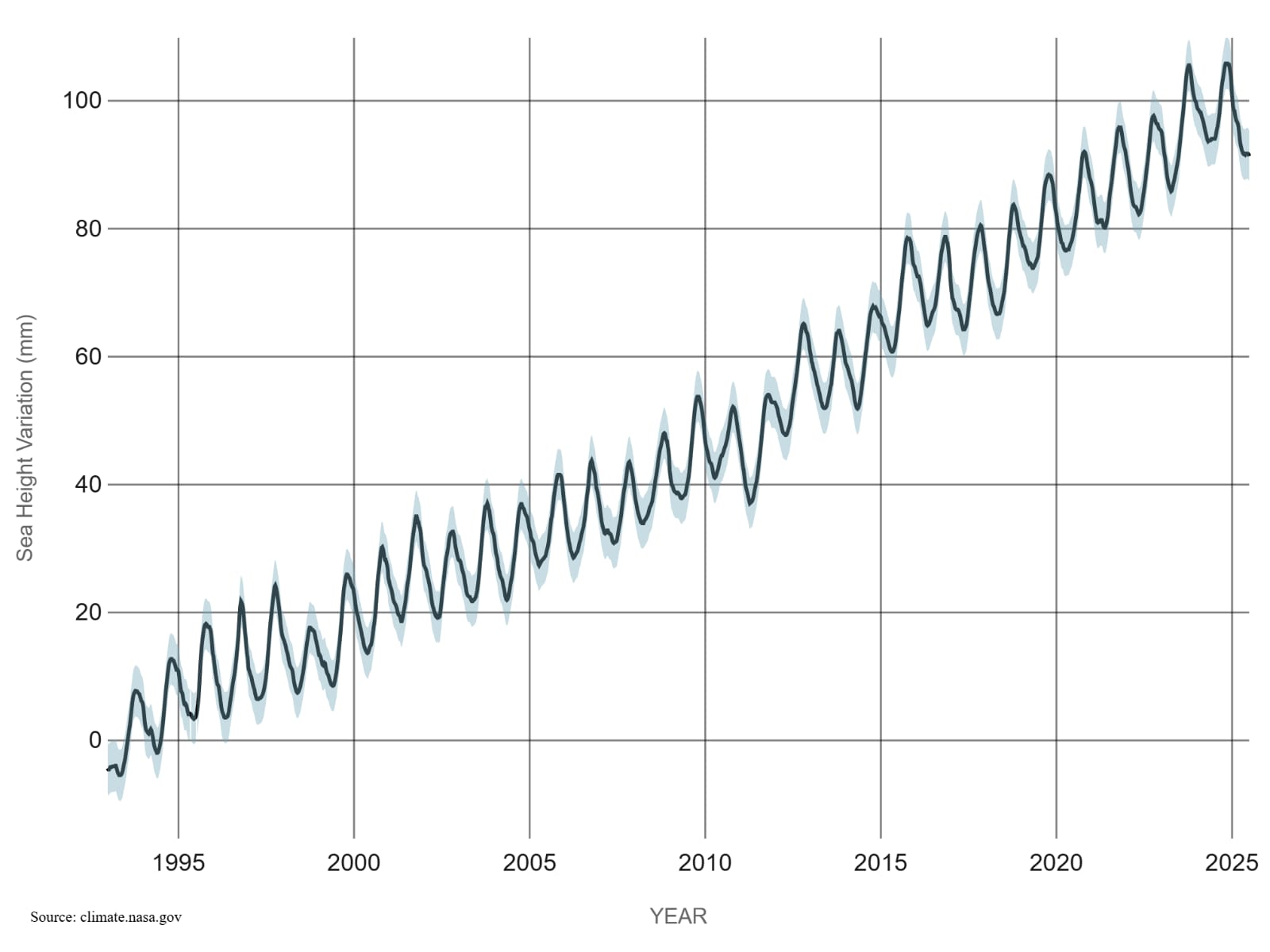
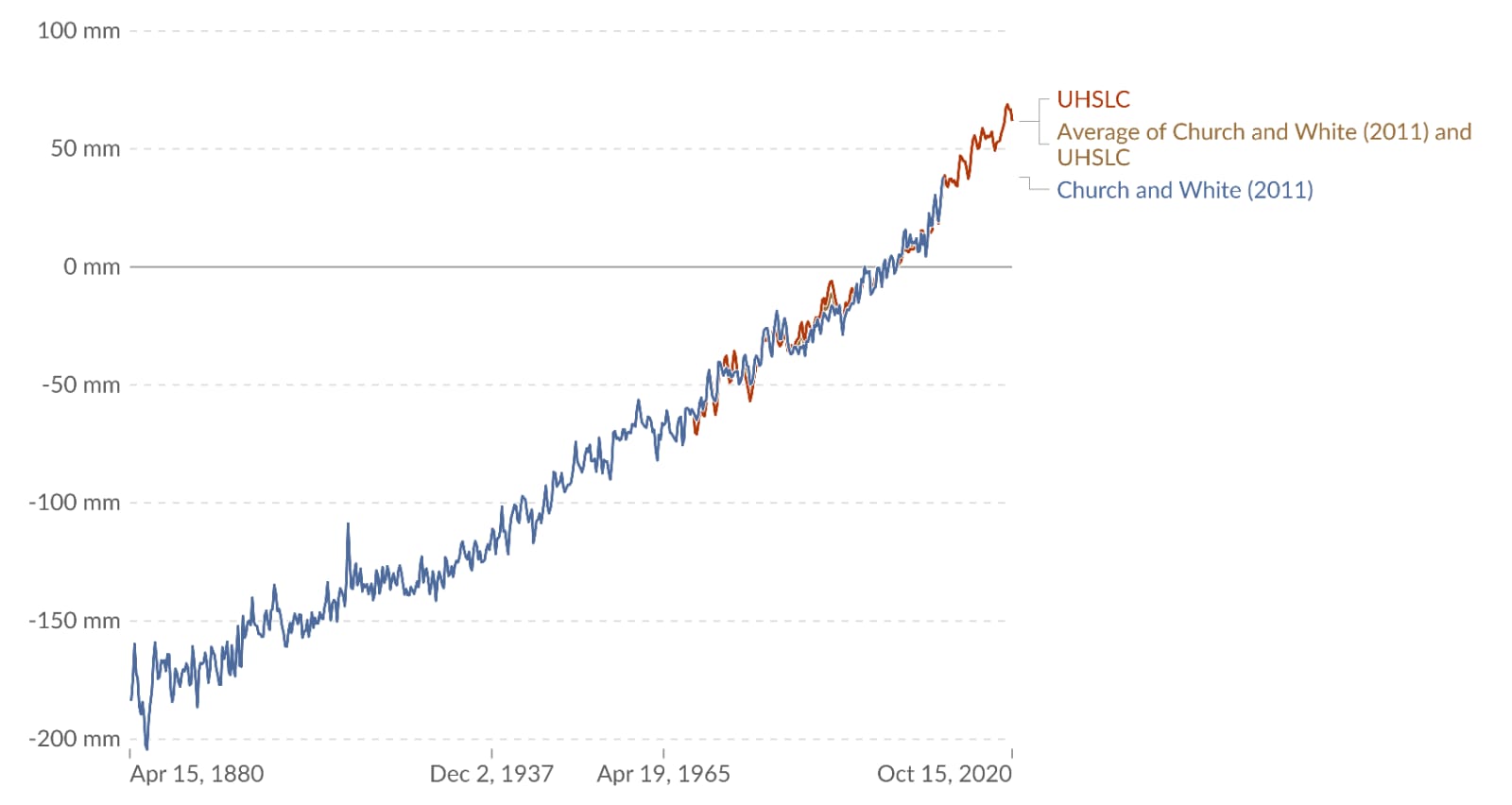
Global sea level rise is driven by ocean warming (thermal expansion) and melting glaciers and ice sheets. It is one of the most irreversible impacts of climate change, threatening coastal communities, ecosystems, and infrastructure worldwide.
- 91 (± 4.0) mm global mean sea level rise since 1993
- Global mean sea level has risen ~20–25 cm (8–10 inches) since 1900
- Sea level is currently rising at ~4.8 mm per year, accelerating over time
- The rate of sea level rise has more than doubled since the early 20th century
- ~50% of observed rise comes from ocean thermal expansion
- The remainder is driven by melting glaciers, Greenland, and Antarctic ice sheets
- Greenland alone lost ~250 billion tonnes of ice per year in recent decades
- Sea level rise has accelerated since the 1990s, tracked by satellite altimetry
- With 1.5°C warming, sea levels are projected to rise ~0.4–0.6 m by 2100
- With high emissions, rise could reach ~0.8–1.0 m by 2100
- Long-term warming commits Earth to multi-meter sea level rise over centuries
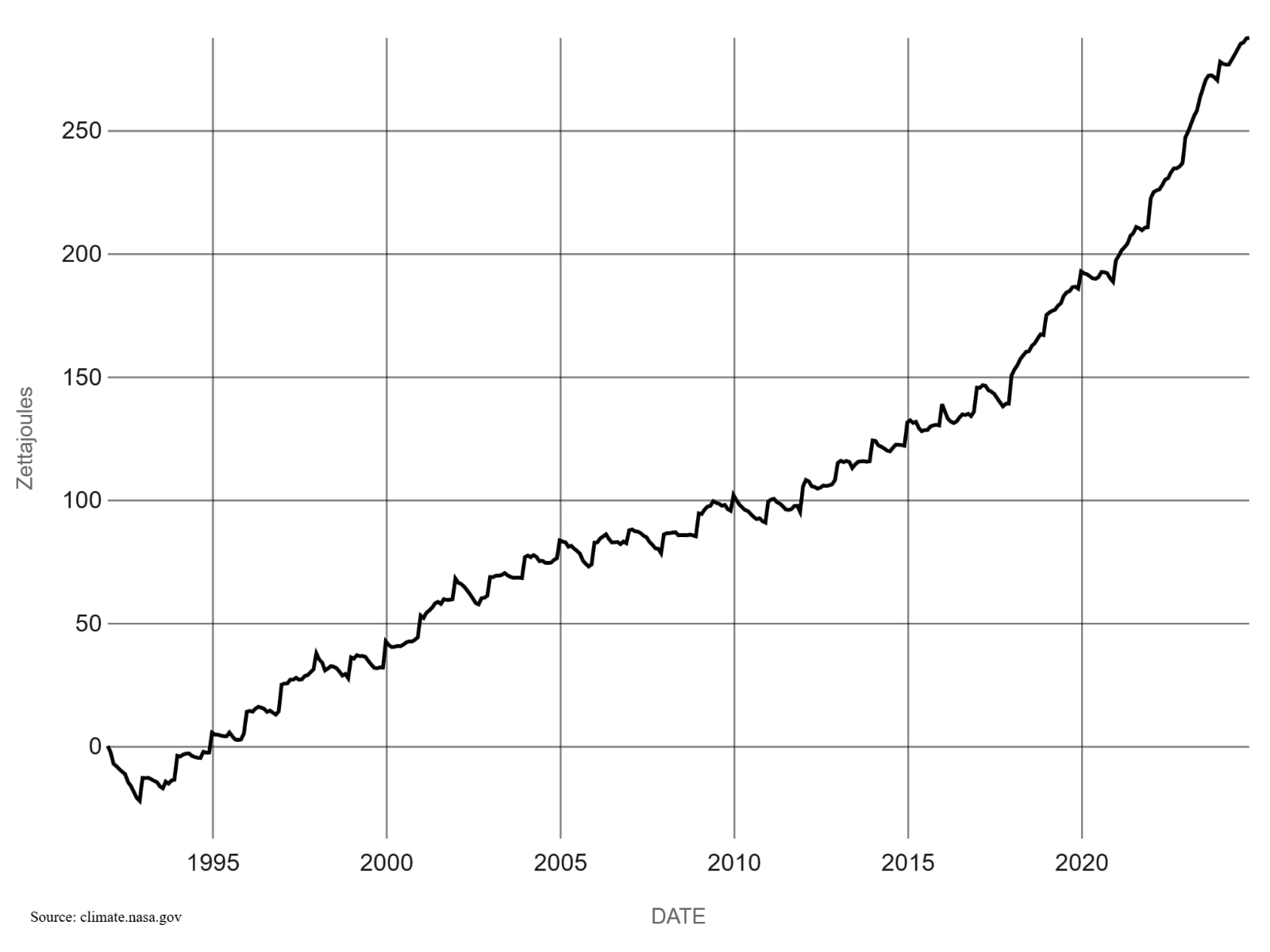
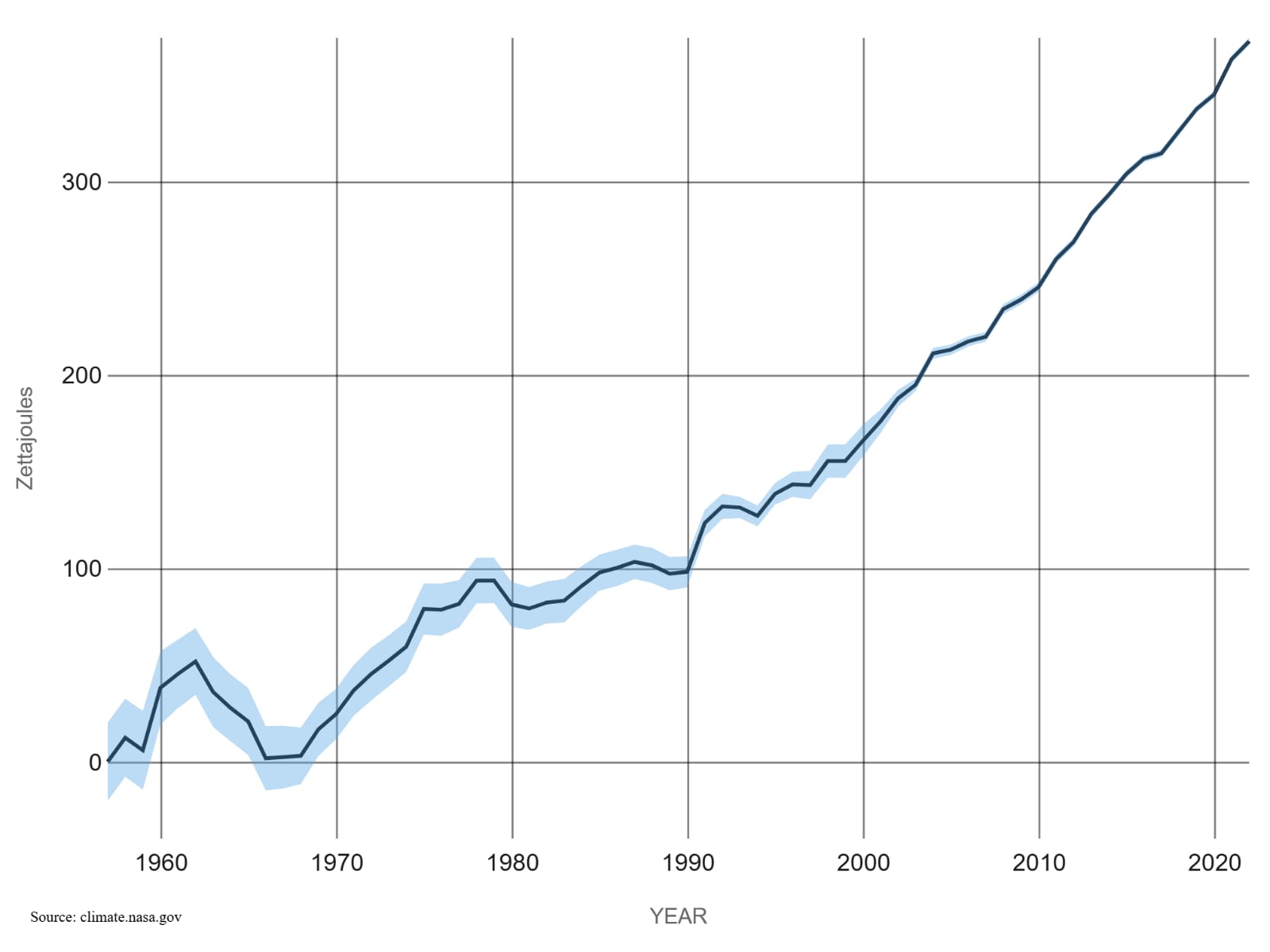
The ocean absorbs most of the excess heat caused by greenhouse gas emissions. This warming drives sea level rise, intensifies storms, disrupts marine ecosystems, and locks in long-term climate change.
- 372 (±2) zettajoules of heat absorbed by the oceans since 1955
- Oceans have absorbed ~90% of excess heat from global warming
- Ocean heat content is at the highest level ever recorded
- The upper 2,000 meters of the ocean are warming rapidly
- Ocean warming has more than doubled since the 1990s
- Global average sea surface temperature reached record highs in 2025
- Ocean warming contributes ~50% of observed sea level rise via thermal expansion
- Marine heatwaves have doubled in frequency since the 1980s
- By 2100, oceans are projected to absorb 2–4× more heat under high-emissions scenarios