Contribute toward the service of truth and collective well-being. Click here
- Home
-
About Us ▾
About Us Tattvabodh Trust The Abstract Mission Certificate Founders The Abstract Monk [GD] Aadya Tyagi
- Our Work ▾
-
Impact ▾
Impact Stories The Wisdom Project Human Potential Development Education Healthcare Nutrition Arts, Literature & Aesthetics Culture & Heritage Livelihood Institutions Women & Youth Environment & Energy Relief & Rehabilitation Digital Transformation Social Justice Scholarship Programme
Impact Numbers Our Journey - Wisdom Hub ▾
- Mission 1.5
- Media
- Youtube
- The Abstract Club
- Get Involved
- Contact Us
Healthcare
Health is the harmony of body,
mind, intellect, and awareness.
Overview
Health is the foundation upon which every dimension of human life rests. The ability to learn, to work, to care, and to participate meaningfully in society depends upon physical strength, mental balance, and access to reliable care. When health systems are fragile or inaccessible, individual vulnerability becomes collective instability.
Healthcare challenges today are not limited to disease alone. Unequal access to medical services, delayed diagnosis, limited preventive awareness, lifestyle-related disorders, and rising mental health concerns together create a layered and complex public health landscape. Treatment often begins where prevention should have acted earlier. Awareness frequently follows illness rather than preceding it.
The Trust approaches healthcare as an integrated and sustained responsibility.
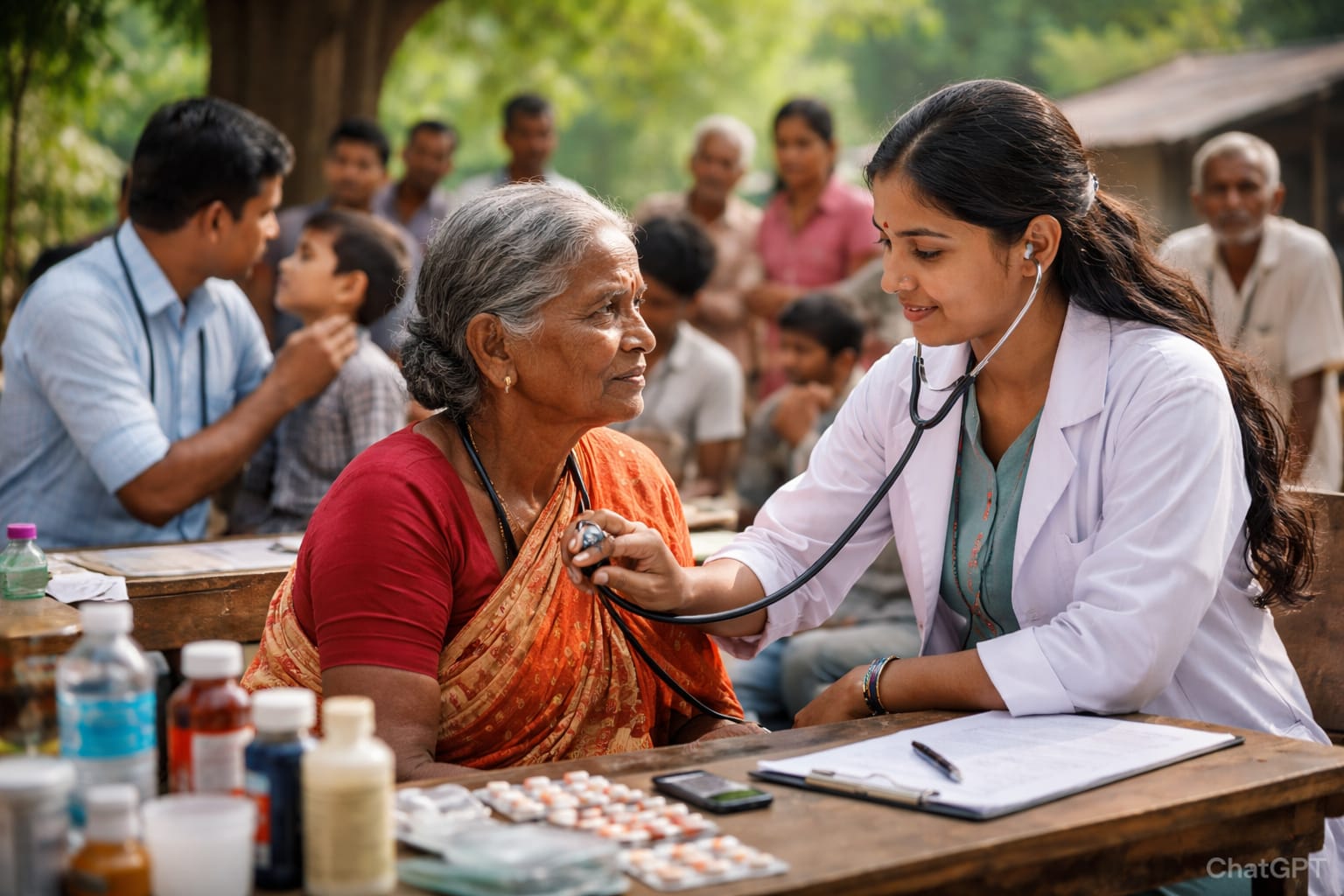
Community health camps form a central pillar of this work. Periodic medical outreach initiatives provide accessible consultations, diagnostic screenings, and basic treatment services, particularly in areas where regular healthcare infrastructure may be limited. These camps prioritize early detection, preventive screening, and appropriate referrals, reducing the long-term impact of avoidable conditions.
Preventive health education accompanies medical intervention. Awareness programmes address nutrition, hygiene, lifestyle-related diseases, maternal and child health, stress management, and early symptom recognition. By strengthening community-level understanding, healthcare becomes proactive rather than reactive.
Recognizing that well-being extends beyond clinical care, the Trust organizes structured wellness retreats and integrative health programmes. These initiatives encourage sustainable habits that support physical vitality, mental clarity, and emotional resilience. Guided sessions may include structured movement practices, stress-regulation techniques, reflective engagement, and lifestyle alignment aimed at long-term stability rather than temporary relief.
Mental and emotional health are treated as inseparable from physical well-being. Dialogues, facilitated sessions, and community-based engagement create responsible spaces to address stress, burnout, anxiety, and resilience-building. The objective is not therapeutic substitution, but awareness, early support, and informed redirection where specialized care is required.
The Trust also seeks to strengthen collaborative healthcare networks by engaging medical professionals, volunteers, local institutions, and partner organizations. Continuity of care depends not only on isolated events but on sustained partnerships that ensure follow-up, referral systems, and expanding reach.
Health equity remains a guiding principle. Access to preventive screening, reliable information, and basic medical services should not be determined by geography or economic circumstance. By extending outreach efforts and reducing informational barriers, the Trust works toward narrowing disparities in healthcare access.
Environmental and lifestyle awareness are recognised as influencing long-term health outcomes. Programmes may therefore include education on sanitation, safe water practices, balanced nutrition, and community hygiene standards, reinforcing the interconnected nature of individual and public health.
Healthcare, in this integrated framework, is not episodic intervention but continuous cultivation. It requires informed individuals, resilient communities, and systems that prioritize prevention alongside treatment. It demands awareness, responsibility, and sustained engagement.
Through health camps, preventive education initiatives, wellness retreats, community dialogues, and collaborative partnerships, the Trust seeks to strengthen both immediate healthcare access and long-term well-being. The objective is not only to respond to illness, but to contribute to communities that are healthier, more informed, and better equipped to sustain their own resilience.