Contribute toward the service of truth and collective well-being. Click here

- Home
-
About Us ▾
About Us Tattvabodh Trust The Abstract Mission Certificate Founders The Abstract Monk [GD] Aadya Tyagi
- Our Work ▾
-
Impact ▾
Impact Stories The Wisdom Project Human Potential Development Education Healthcare Nutrition Arts, Literature & Aesthetics Culture & Heritage Livelihood Institutions Women & Youth Environment & Energy Relief & Rehabilitation Digital Transformation Social Justice Scholarship Programme
Impact Numbers Our Journey - Wisdom Hub ▾
- Mission 1.5
- Media
- Youtube
- The Abstract Club
- Get Involved
- Contact Us
Environment &
Energy
The elements are not resource; they are
living forces.
Overview
Environmental stability is the foundation of long-term human survival and social progress. Air quality, soil health, water systems, biodiversity, and energy infrastructure directly shape public health, food security, and economic resilience. When ecological systems weaken, the effects extend across generations.
Climate change, resource depletion, pollution, unsustainable consumption patterns, and biodiversity loss represent interconnected challenges rather than isolated concerns. Addressing them requires structural awareness, scientific understanding, and collective responsibility.
The Trust approaches environmental and energy initiatives as long-term commitments to ecological balance, sustainability, and compassionate stewardship.
Climate awareness and environmental literacy form a foundational component of this work. Programmes and dialogues engage communities in understanding the scientific basis of climate change, carbon emissions, ecosystem degradation, and the relationship between lifestyle choices and planetary impact. Environmental responsibility begins with informed participation.
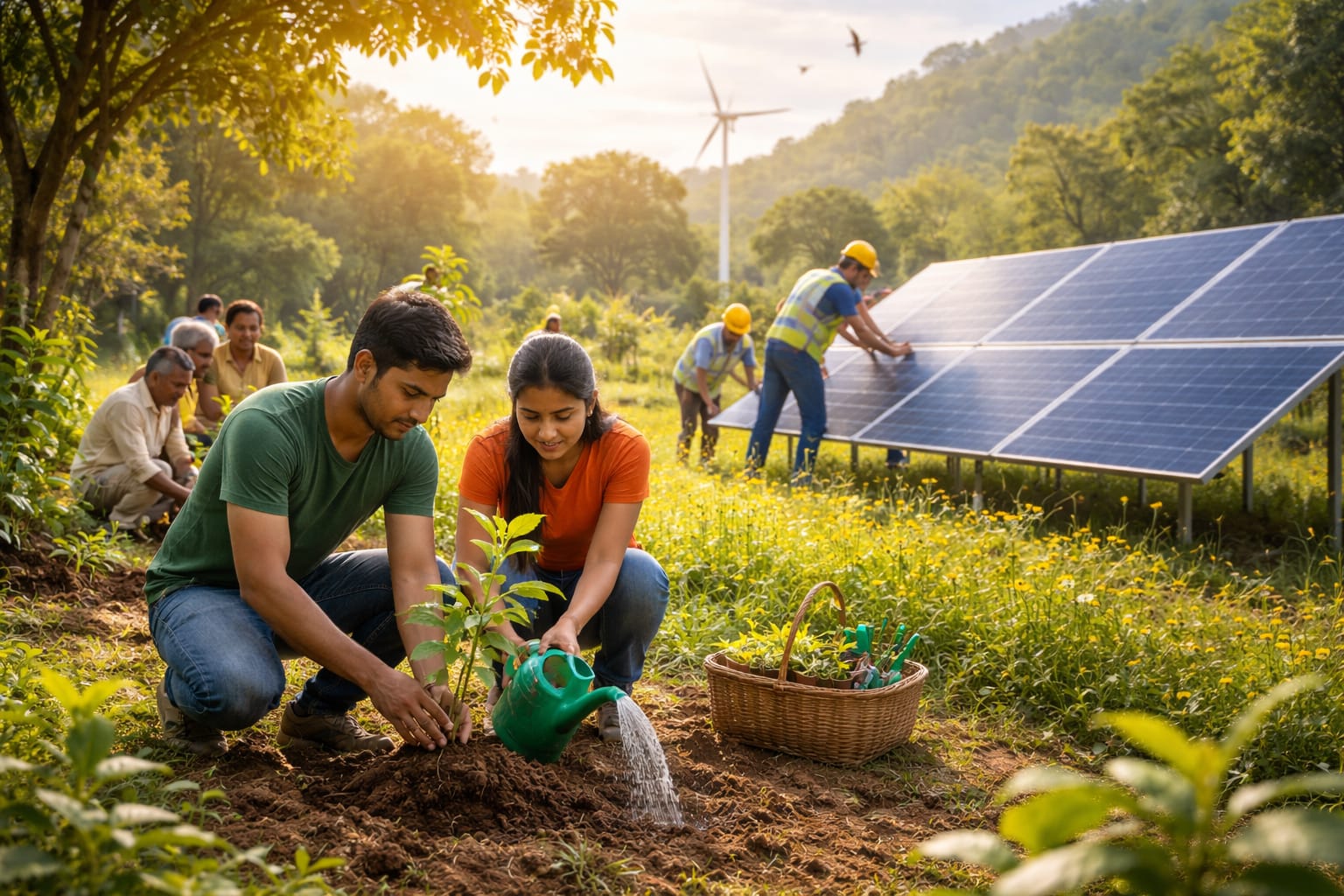
Afforestation and ecological restoration efforts, including plantation drives and community-led green initiatives, contribute to strengthening local ecosystems. Tree plantation programmes are designed with attention to native species selection, soil compatibility, and long-term maintenance, ensuring ecological coherence rather than symbolic action.
Cleanup and waste-reduction drives address immediate environmental concerns while reinforcing sustainable habits. Community engagement in waste segregation, recycling awareness, and responsible disposal practices promotes shared accountability for local ecosystems.
Sustainable agriculture remains central to environmental resilience. Initiatives may include awareness and training in ecological farming practices, soil regeneration techniques, natural fertilization methods, water conservation strategies, and crop diversification. Strengthening sustainable farming reduces chemical dependency, protects biodiversity, and enhances long-term productivity.
The Trust also recognizes the importance of environmental responsibility. Compassion toward living systems extends beyond conservation into everyday consumption choices. Awareness initiatives may include dialogue on plant-based nutrition, reduction of unnecessary animal exploitation, and the environmental impact of food systems. Veganism and conscious dietary practices are presented not as ideological positions, but as informed considerations grounded in sustainability, public health, and responsible decision-making.
Renewable energy awareness forms another pillar of this work. Educational engagements and collaborative initiatives explore solar, wind, and other renewable solutions as pathways toward reducing carbon dependency and strengthening local energy resilience. Encouraging decentralized and clean energy adoption supports both environmental stability and economic sustainability.
Water stewardship is integrated within environmental efforts through awareness campaigns on conservation, responsible usage, and protection of local water bodies. Community participation in maintaining ponds, rivers, and watershed systems contributes to long-term ecological security.
The Trust views environmental action as both practical and intergenerational. Today’s consumption patterns directly influence the climate stability and resource availability of future generations. Sustainable development requires balancing present needs with ecological preservation.
Environmental responsibility is therefore approached not as occasional intervention, but as sustained behavioural and structural change. It involves informed choices, community cooperation, technological transition, and heightened awareness.
Through plantation drives, ecological farming support, renewable energy awareness, cleanup initiatives, sustainability education, and compassion-driven lifestyle dialogues, the Trust seeks to contribute to healthier ecosystems and more responsible patterns of development.
Stable environments support healthy populations. Responsible energy systems sustain economic continuity. And ecological balance safeguards the future of generations yet to come.