Contribute toward the service of truth and collective well-being. Click here

- Home
-
About Us ▾
About Us Tattvabodh Trust The Abstract Mission Certificate Founders The Abstract Monk [GD] Aadya Tyagi
- Our Work ▾
-
Impact ▾
Impact Stories The Wisdom Project Human Potential Development Education Healthcare Nutrition Arts, Literature & Aesthetics Culture & Heritage Livelihood Institutions Women & Youth Environment & Energy Relief & Rehabilitation Digital Transformation Social Justice Scholarship Programme
Impact Numbers Our Journey - Wisdom Hub ▾
- Mission 1.5
- Media
- Youtube
- The Abstract Club
- Get Involved
- Contact Us
Women, Youth &
Communities
Strength is awakened when exclusion
ends.
Overview
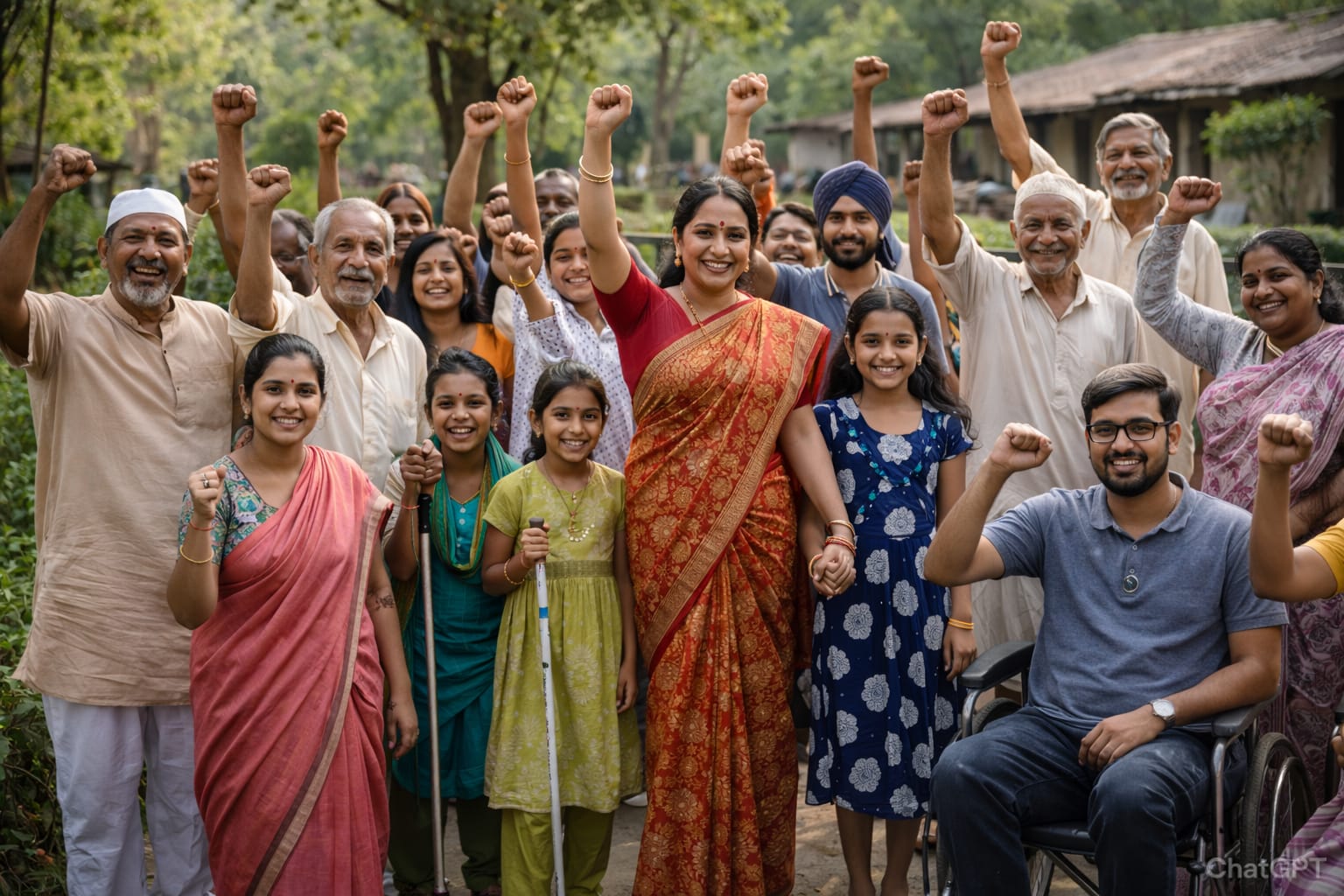
Equitable development requires deliberate attention to those who face structural barriers to opportunity. Social, economic, educational, and cultural systems do not affect all individuals equally. Women, young people, and historically marginalized communities often encounter constraints that limit access to resources, representation, and decision-making spaces.
Sustainable progress depends upon expanding agency where it has been restricted.
The Trust approaches this work not as charity, but as structural inclusion—strengthening capacity, access, and participation across social and economic domains.
For women, initiatives focus on expanding educational continuity, economic participation, leadership development, and informed decision-making. Financial literacy programmes, entrepreneurship support, mentorship networks, and skill-building workshops aim to strengthen autonomy and long-term stability. When women gain access to opportunity and institutional support, households and communities experience measurable improvements in education, nutrition, and economic resilience.
Youth engagement is approached as a long-term investment in social stability and innovation. Structured mentorship, career guidance, leadership forums, and skill development programmes enable young individuals to navigate academic, professional, and civic pathways with clarity. Particular emphasis is placed on critical thinking, inner clarity, emotional resilience, and adaptability in an evolving economic landscape.
Marginalized communities often face compounded challenges—limited institutional access, educational gaps, social exclusion, and economic vulnerability. Programmes are designed to reduce these barriers through targeted scholarships, livelihood support, health outreach, and community-based learning platforms. Creating enabling environments ensures that potential is not constrained by circumstance.
Representation and voice form an important dimension of this work. Dialogue platforms, leadership forums, and collaborative initiatives encourage meaningful participation in local decision-making processes. Inclusion is strengthened when individuals are not merely beneficiaries of development, but contributors to it.
Awareness and rights-based education may also be integrated where appropriate, supporting informed engagement with legal, financial, and civic systems. Access to information strengthens self-reliance and reduces dependency.
The Trust recognizes that empowerment is most sustainable when it is multidimensional. Education without economic opportunity remains fragile. Economic opportunity without social inclusion remains unstable. Social inclusion without self-confidence remains incomplete. Therefore, initiatives are designed to integrate skill-building, mentorship, institutional linkage, and community engagement.
Intergenerational impact remains central. When women are supported, children’s educational continuity improves. When youth are guided constructively, communities reduce cycles of instability. When marginalized individuals gain access to opportunity, social systems become more balanced and resilient.
The objective is not to create parallel structures, but to strengthen inclusive participation within existing systems—education, healthcare, livelihood, arts, and civic engagement.
Through scholarships, leadership development initiatives, skill-building programmes, mentorship networks, and community partnerships, the Trust works toward reducing structural disparities and expanding pathways for equitable growth.
Inclusive societies are not built through rhetoric, but through access. When women, youth, and marginalized communities are equipped with opportunity, stability, and voice, development becomes more balanced, representative, and enduring.